


Healthy nutrition for school-aged children does not require a complicated diet or a fixed daily menu. The goal is to build a balanced eating pattern that offers a variety of vegetables, fruits, grains, protein foods and dairy or appropriate alternatives while limiting foods and drinks high in added sugars, saturated fat and sodium. [1] [2] [3]
On school days, the challenge becomes much more practical: What should a child eat before school? What belongs in the lunchbox? How can food be kept safe? And what should parents do when most of the lunch comes home uneaten?
This guide answers those questions with practical steps for creating a healthy school-day eating routine that can last throughout the academic year.
For a broader plan covering sleep, activity, hygiene and emotional preparation, see our back-to-school child health guide.
What does healthy nutrition mean for school-aged children?
Healthy eating is not about finding one “perfect” food. It is about creating variety across the day and week. Nutrition guidance for children recommends offering foods from different groups, including vegetables, fruits, grains, protein foods and dairy or appropriate fortified alternatives, while choosing nutrient-dense options and limiting added sugars, saturated fat and sodium. [2] [3]
Children's needs vary with age, growth, activity and health. There is therefore no single portion size or fixed menu that is right for every child. The focus should be on variety, regular eating opportunities and the child's overall growth and health.
How to build a healthy school-day breakfast
Breakfast does not need to be complicated. The aim is to provide nutritious food that a child can realistically eat before leaving for school.
CDC notes that eating a healthy breakfast among students is associated with improved cognitive function, particularly memory, as well as improved mood and reduced absenteeism. [2] The American Academy of Pediatrics also highlights breakfast as an important source of energy for children at the beginning of the school day. [4]
A simple breakfast formula
A practical breakfast can combine two or three of the following:
- Grains or starches: such as oats or whole-grain bread.
- Protein or dairy: such as eggs, cheese, milk, yogurt or an appropriate alternative.
- Fruit or vegetables: such as banana, apple, cucumber or tomato.
- Water: an important part of the morning routine.
Breakfast does not need to contain traditional breakfast foods. What matters is nutritional quality, practicality and consistency.
How to build a balanced school lunchbox
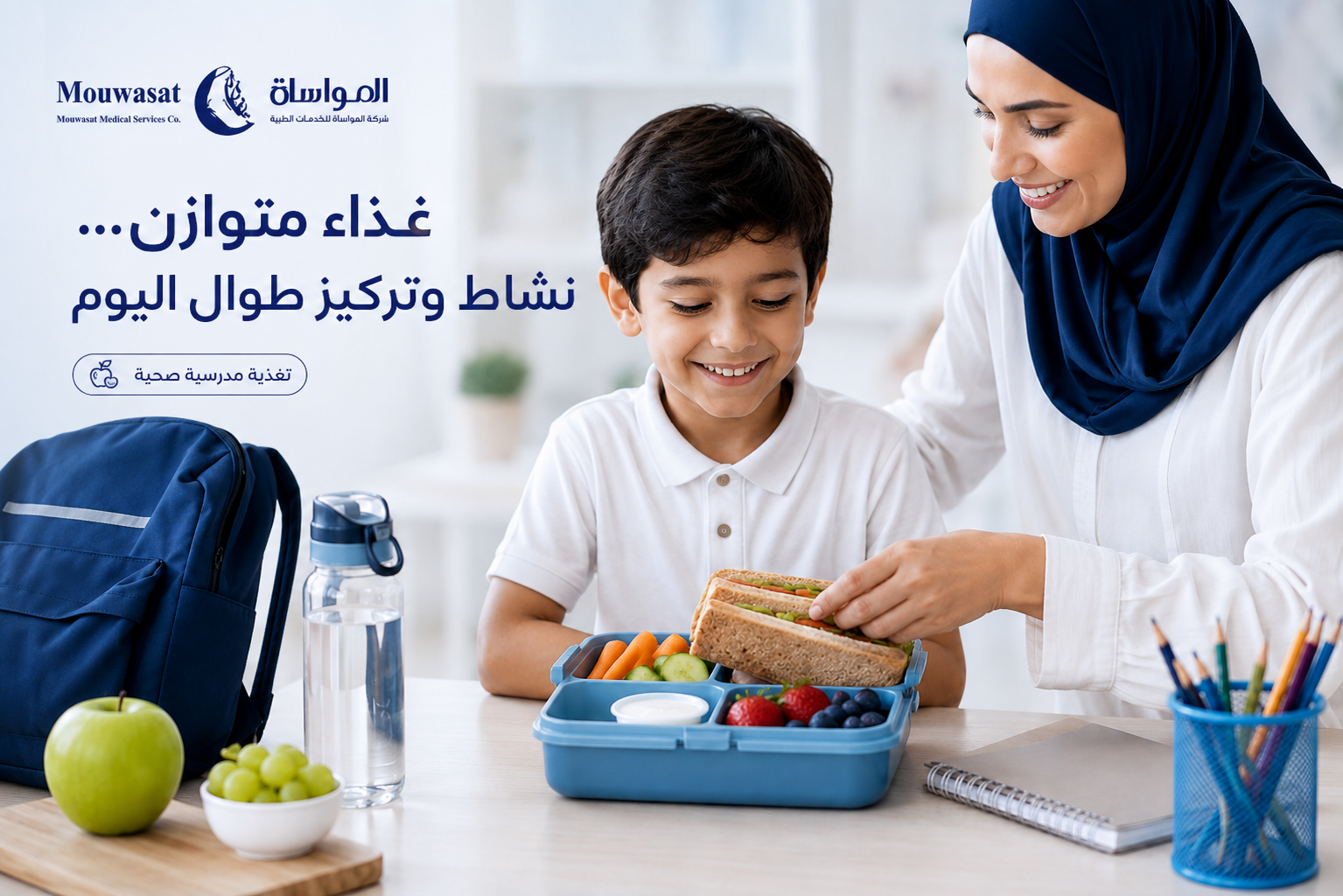
Instead of searching for a new recipe every morning, parents can use a simple framework and select suitable foods from several groups according to the child's needs, preferences, school policies and any food allergies.
| Food Group | Practical Examples | Purpose |
|---|---|---|
| Grains and starches | Whole-grain bread or wrap, oats or other suitable grain foods | Provides energy as part of a balanced meal |
| Protein | Eggs, chicken, hummus, beans, cheese or another suitable source | Supports growth and adds variety |
| Vegetables or fruit | Cucumber, carrots, tomatoes, peppers, apples, oranges, bananas or seasonal fruit | Adds variety, color and fiber |
| Dairy or suitable alternative | Milk, laban, yogurt, cheese or an appropriate fortified alternative | Adds a food from the dairy group or its alternative |
| Drink | Water | The main everyday hydration choice |
This is not a mandatory meal plan. It is simply a practical way to create variety without having to redesign the lunchbox from scratch each morning. [2] [3]
Healthy school lunch ideas for children
The following are flexible examples rather than a fixed nutrition plan. Adjust them according to your child's needs, preferences, allergies and school rules.
| Idea | Example Combination |
|---|---|
| 1 | Whole-grain cheese sandwich + cucumber and tomato + fruit + water |
| 2 | Chicken and vegetable wrap + seasonal fruit + properly chilled yogurt + water |
| 3 | Hummus with suitable bread + sliced vegetables + apple or orange + water |
| 4 | Safely chilled egg sandwich + vegetables + banana + water |
| 5 | Labneh or cheese sandwich + sliced vegetables + fruit + water |
Healthy school snack ideas
If the school day is long and a child needs a snack, the goal is to add useful nutrition rather than simply providing another source of added sugar.
- Fresh fruit that is easy to carry.
- Safely stored sliced vegetables.
- Yogurt or laban when it can be kept properly chilled.
- Whole-grain foods that are lower in added sugar and sodium.
- An age-appropriate protein source that complies with school allergy policies.
A snack is not automatically necessary for every child. Its usefulness depends on the length and structure of the school day and the child's overall meal pattern.
Water and drinks during the school day
Water should be the main everyday hydration choice. MyPlate encourages making water, milk or appropriate fortified alternatives easy options for children while limiting drinks high in added sugars. [3]
CDC also notes that adequate hydration may support cognitive function in children and adolescents, which is relevant during the school day. [2]
Keeping packed lunches safe in warm weather
A nutritious lunch also needs to be safe. This is especially important when the lunchbox includes perishable foods such as yogurt, dairy products, eggs, chicken or prepared sandwiches.
The U.S. Department of Agriculture's Food Safety and Inspection Service recommends using an insulated lunch bag and adequate cold sources for perishable packed foods. For cold lunches, its guidance recommends at least two cold sources, such as two frozen gel packs or a frozen gel pack combined with a frozen bottle of water. [6]
- Use an insulated lunch bag for foods that need to stay cold.
- Add suitable cold sources for perishable foods.
- Wash produce before packing it.
- Use clean, tightly closed containers.
- Do not rely on appearance alone to decide whether food is safe.
This deserves particular attention during hot weather in Saudi Arabia, especially when a lunch is prepared several hours before it will be eaten.
What if your child is a selective eater?
The most nutritious lunchbox on paper has little value if the child consistently refuses to eat it. Involving children in choosing and preparing suitable foods can make school meals more practical.
MyPlate encourages age-appropriate participation in food shopping and preparation. The American Academy of Pediatrics also advises parents to avoid turning meals into battles or forcing children to eat particular foods, while continuing to offer balanced choices. [3] [5]
If the lunchbox regularly comes home almost untouched, investigate first
- Is the child's lunch period too short?
- Is the amount of food too large?
- Is the food difficult to open or eat quickly?
- Does the texture or temperature change after several hours?
- Does the child prefer some options over others?
- Is there an ongoing appetite concern that needs assessment?
Sometimes a simpler meal, different presentation or giving the child a choice between two suitable options can be more effective than adding more food.
Managing food allergies at school
If a child has a diagnosed food allergy, choosing an appropriate lunch is only one part of staying safe. CDC recommends coordination among families, schools and healthcare professionals to manage food allergies, reduce allergen exposure and prepare for severe reactions. [7]
- Inform the school about known food allergies.
- Follow the child's medical emergency plan.
- Check the school's food and allergy policies.
- Teach the child not to share food when this is relevant to their condition.
- Make sure required emergency medication is available according to the healthcare and school plan.
Common school nutrition mistakes
Searching for one “superfood”
No single food can replace dietary variety. The overall eating pattern across the day and week matters more.
Packing more food than the child can realistically eat
Quality and variety are more useful than filling the lunchbox with large amounts that cannot be eaten during the available break.
Using sweets as a constant reward
Regularly using food as a reward can make certain foods appear more desirable than others. The goal should be a balanced and neutral relationship with food. [5]
Forgetting food safety
Sending yogurt, eggs, chicken or other perishable foods for hours without appropriate temperature control can make an otherwise nutritious lunch unsafe. [6]
Pressuring children to finish everything
The goal is to build sustainable eating habits rather than create daily conflict around food. Offer suitable options and look at the child's overall eating and growth pattern.
When should parents seek medical or nutrition advice?
Appetite can vary from day to day. However, consider discussing your child's nutrition with a doctor or qualified nutrition professional if there are persistent concerns about growth, very limited food variety, significant ongoing feeding difficulties, symptoms associated with certain foods or a chronic health condition that affects nutrition.
Children should not be placed on unnecessarily restrictive diets or have entire food groups removed without a medical reason and appropriate professional guidance.
Frequently asked questions about school-age nutrition
What is a healthy breakfast for a school-aged child?
There is no single ideal breakfast. A practical meal can combine a grain or starch, a protein or dairy food, fruit or vegetables and water. Variety and a routine the child can maintain are more important than following a fixed menu. [2] [3]
What should a healthy school lunch contain?
A school lunch can combine grains or starches, a protein source, vegetables or fruit and dairy or an appropriate alternative, with water. Every food group does not need to appear in every single meal if the child's overall daily eating pattern is varied and balanced.
Is juice a replacement for water?
Water should remain the main everyday hydration choice, and drinks high in added sugars should be limited. [2] [3]
What should I do if my child does not eat their school lunch?
Start by finding out why. The portion may be too large, the break may be short or the food may be difficult to eat at school. Involve your child in choosing suitable foods and avoid pressure or punishment around eating. [3] [5]
How can I keep a packed lunch cold and safe?
Use an insulated lunch bag and suitable cold sources for perishable foods. USDA guidance recommends two cold sources for packed cold lunches that need to remain chilled during transport and storage. [6]
Make healthy eating a routine, not a daily project
The best school lunch is not the most complicated or visually perfect one. It is the meal that balances nutrition, safety and practicality—and that the child can realistically eat.
Start with a small group of suitable foods your child accepts, then gradually expand variety. Involve them in choosing and preparing food, and make water, fruits, vegetables, protein foods and appropriate grains easy everyday options at home.
Over time, healthy school nutrition can become part of the family's normal routine rather than another stressful task that starts from scratch every morning.
Sources and References
- Saudi Ministry of Health. Child Nutrition . Updated August 2026.
- Centers for Disease Control and Prevention (CDC). Childhood Nutrition Facts .
- U.S. Department of Agriculture – MyPlate. Healthy Eating for Kids .
- American Academy of Pediatrics (AAP) – HealthyChildren.org. Breakfast for Learning: Why the Morning Meal Matters .
- American Academy of Pediatrics (AAP) – HealthyChildren.org. How to Please Fussy Eaters .
- U.S. Department of Agriculture – Food Safety and Inspection Service. How Do You Keep a Bag Lunch Safe? . Updated March 2025.
- Centers for Disease Control and Prevention (CDC). Food Allergies in Schools .
This content is intended for health education and does not represent an individualized nutrition plan or replace professional medical or nutrition assessment when needed.