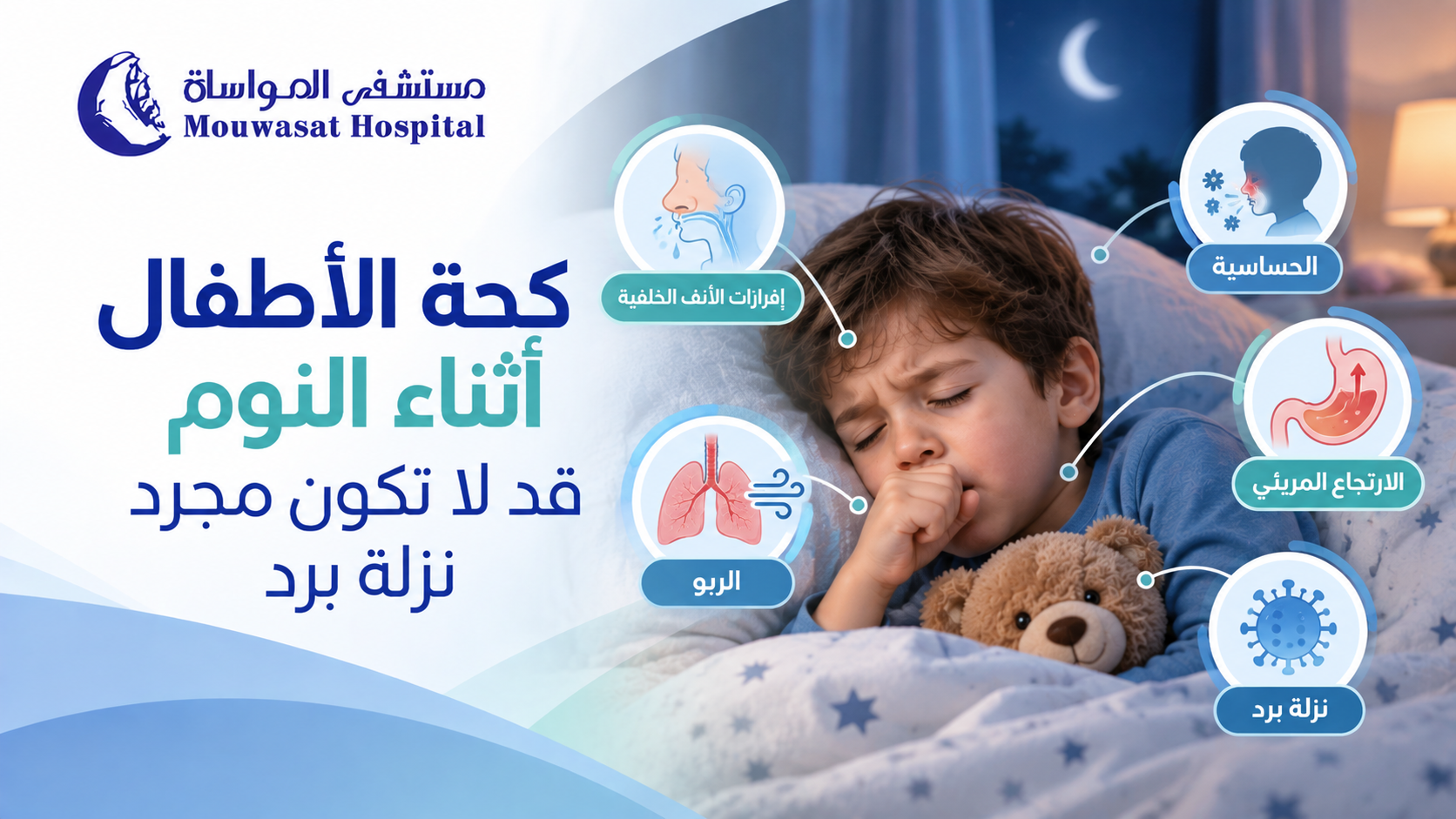

A child may seem relatively well during the day, only for coughing to begin or become noticeably worse after bedtime. A child cough at night is common and does not automatically mean something serious, but the nighttime pattern can provide useful clues.
Colds and nasal congestion can make coughing more noticeable when a child lies down, while asthma, croup and other conditions may also produce nighttime symptoms.
The important question is not simply whether the child coughs at night, but what the cough sounds like, how long it has lasted, how the child is breathing and what other symptoms occur with it.
For the broader picture, see: Child Cough Treatment by Cough Type, Age and Associated Symptoms.
Nighttime itself does not cause coughing, but several factors can make a cough more noticeable after bedtime.
When a child lies down, nasal secretions and airway irritation may become more noticeable. Some conditions, including asthma and croup, can also produce symptoms that become more prominent at night. [1] [2]
The key point is that a nighttime pattern is a clue rather than a diagnosis.
Did it begin two days ago with a cold, or does it return every night for weeks? Does the child cough with exercise? Is there wheezing? How is the child's breathing? Those details change the next step.
| Pattern | What may need to be considered? |
|---|---|
| Cough started with a runny or blocked nose a few days ago | Viral illness and irritation from nasal secretions are common possibilities. |
| Recurrent nighttime cough with wheezing, breathlessness or exercise symptoms | Assessment for asthma or another airway condition may be appropriate. |
| Barking cough with hoarseness or a harsh sound when breathing in | Croup may be a possibility and commonly becomes worse at night. |
| Daily cough lasting more than 4 weeks | This meets the pediatric definition of chronic cough and should be assessed. |
| Cough began suddenly while eating or playing with a small object | An inhaled foreign body needs to be considered. |
For more on cough characteristics, see: Dry vs Wet Cough in Children — The Difference Goes Beyond Mucus.
Often, yes. Viral respiratory infections commonly cause both nasal congestion and coughing, and secretions can irritate the throat.
If the cough began with a typical cold, the child remains reasonably active, drinks normally and breathes comfortably, the symptoms will often improve gradually as the infection resolves. [3]
However, a cough that continues to recur night after night should not automatically be attributed to nasal drainage without considering the rest of the child's symptoms.
Nighttime cough can occur with asthma, particularly when it is accompanied by:
The American Academy of Pediatrics notes that symptoms that are worse at night may be a warning sign of asthma and that cough can sometimes be one of its early symptoms. [4]
However, nighttime cough alone does not diagnose asthma. Diagnosis depends on the overall symptom pattern, history and clinical assessment.
Recurring nighttime cough or repeated waking because of respiratory symptoms can be a reason to discuss asthma control with the child's clinician rather than simply trying to suppress the cough.

A barking cough with a hoarse voice or a harsh, high-pitched sound while breathing in may occur with croup.
Croup commonly begins with cold-like symptoms, and the NHS notes that its symptoms are often worse at night. [5]
Reflux can be one of several possibilities in selected children, particularly when other compatible symptoms are present. However, nighttime cough by itself does not diagnose reflux.
Pediatric cough guidelines recommend assessing cough according to its characteristics and clinical history and treating the identified cause rather than relying on nonspecific treatment trials. [6]
If digestive symptoms are also present, see: GERD: Symptoms, Causes, Diagnosis and Treatment.
Parents may naturally want to elevate a baby's head when the baby is coughing or congested, but safe infant sleep rules still apply.
The American Academy of Pediatrics recommends that infants sleep on their backs on a firm, flat, non-inclined surface, including infants with reflux. Pillows, wedges and an elevated mattress should not be used to treat cough or congestion during sleep. [7] [8]
If your child is breathing comfortably and has no warning signs, supportive measures may help depending on the child's age and symptoms:
For a full home-care guide, see: Child Cough Home Treatment: What Helps and What to Avoid.
That pattern does not point to one single diagnosis. Nasal symptoms may become more noticeable when lying down, while asthma, allergy and other conditions may also produce nighttime symptoms.
If the pattern happens repeatedly, regularly wakes the child, or is associated with exercise, wheezing or breathing difficulty, it is worth evaluating why the cough keeps returning rather than focusing only on stopping it.
Is the pattern recurring? Two nights of coughing during a cold are different from a cough that wakes a child most nights or repeatedly appears with exercise.
CHEST pediatric guidelines define chronic cough as a daily cough lasting longer than 4 weeks. [10]
Duration therefore matters alongside the nighttime pattern.
| Situation | Possible next step |
|---|---|
| Cough with a cold, normal breathing, good fluid intake and normal activity | Supportive home care and monitoring are often reasonable. |
| Cough occurs most nights, is linked to exercise or wheezing, or repeatedly disrupts sleep | Arrange pediatric assessment to identify the cause. |
| Daily cough lasting more than 4 weeks | Evaluation for chronic cough is appropriate. |
| Severe breathing difficulty, blue lips, marked lethargy or stridor with respiratory distress | Seek emergency medical care immediately. |
A child cough at night is common and often accompanies colds and nasal congestion, but recurring nighttime cough may also be part of asthma, croup or another condition.
Rather than focusing only on the time the cough occurs, pay attention to its frequency, duration, character, breathing pattern and associated symptoms.
Mouwasat Hospital's Pediatric Department provides care for common and specialized childhood respiratory conditions, including Pediatric Pulmonology services.

Nasal secretions and airway irritation may become more noticeable when lying down, while asthma, allergy and other conditions may also cause nighttime symptoms. The pattern alone does not identify the cause.
No. Asthma is one possibility, particularly when the cough recurs with wheezing, shortness of breath or exercise, but many other causes can produce nighttime coughing.
This depends on age and cause. Fluids, saline nasal care when congestion is present, and honey for children older than 1 year may help some children. Persistent cough or cough with wheezing or breathing difficulty should be evaluated.
No. Infants should sleep on their backs on a firm, flat, non-inclined surface without pillows or wedges. [7]
Seek urgent care when coughing is accompanied by severe breathing difficulty, blue or grey lips, marked lethargy, or stridor with respiratory distress. A daily cough lasting longer than 4 weeks also needs medical assessment.
Croup commonly causes a barking cough and often becomes worse at night. Breathing difficulty or stridor while resting needs prompt medical evaluation.