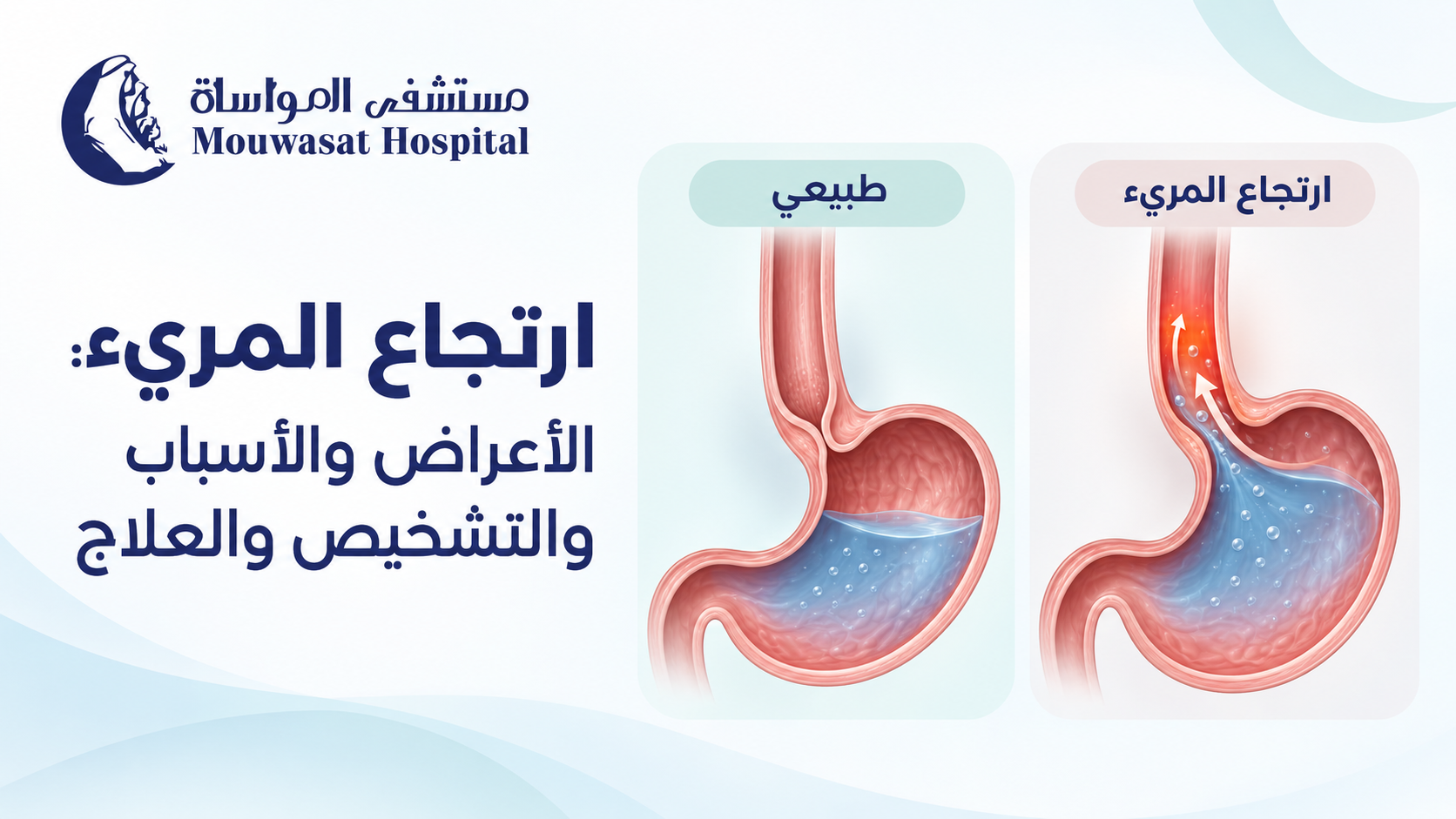

Gastroesophageal reflux occurs when stomach contents move back into the esophagus. It may cause heartburn behind the breastbone or a sour taste in the mouth. However, occasional heartburn does not necessarily mean that a person has chronic gastroesophageal reflux disease (GERD). [1]
GERD becomes more important when symptoms are frequent or troublesome, affect daily life, or lead to complications. Some patients may also experience cough, hoarseness, or swallowing problems without typical heartburn. [2]
Gastroesophageal reflux occurs when stomach contents flow back into the esophagus. GERD refers to reflux that causes repeated troublesome symptoms or complications. [1]
A muscular valve called the lower esophageal sphincter normally opens to allow food into the stomach and then closes. GERD may develop when this valve becomes weak or relaxes when it should not. [2]
Many people occasionally experience heartburn after a large meal or after lying down soon after eating. This does not automatically mean they have chronic GERD.
| Condition | Typical pattern |
|---|---|
| Occasional reflux | Occurs from time to time and then settles. |
| GERD | Symptoms are recurrent or troublesome, or reflux causes injury or complications. |
The most common symptoms are heartburn and regurgitation. [2]
For a deeper look at the symptoms, see our guide to GERD symptoms.
Yes. Some patients may experience cough, hoarseness, or throat symptoms without classic heartburn. [2]
However, these symptoms have many possible causes and should not automatically be attributed to reflux.
If you have throat or voice symptoms without obvious heartburn, read our guide to silent reflux.
When symptoms occur mainly outside the digestive system, doctors may need to consider other causes instead of assuming reflux is responsible.
GERD can occur when the lower esophageal sphincter allows stomach contents to flow back into the esophagus more often than it should.
Factors associated with GERD include:
Foods and drinks that worsen symptoms are not necessarily the underlying cause of GERD.
Coffee, chocolate, fatty meals, spicy foods, acidic foods, or mint may worsen symptoms in some people but not others.
This is why patients do not necessarily need to avoid the same long list of foods. Identifying personal triggers is usually more practical.

In many patients, GERD can initially be evaluated through symptoms and medical history. Doctors may recommend lifestyle changes and treatment without immediate testing.
Testing may be needed when symptoms suggest complications, treatment does not work as expected, or the diagnosis is uncertain.
| Test | When it may help |
|---|---|
| Upper endoscopy | Evaluates the esophagus and stomach when alarm symptoms or possible complications are present. |
| Reflux or pH monitoring | Measures reflux when the diagnosis is uncertain or objective confirmation is needed. |
| Other esophageal tests | May be used when another esophageal disorder is suspected or before selected procedures. |
No. Many patients can initially be assessed from symptoms and medical history.
Endoscopy becomes more important when there is difficulty swallowing, bleeding, unexplained weight loss, persistent symptoms despite treatment, or concern about complications.
When symptoms continue but endoscopy does not provide clear evidence of GERD, reflux monitoring may help determine whether abnormal reflux is actually present.
Persistent symptoms despite acid-suppressing medication do not necessarily mean severe reflux. The diagnosis and treatment approach may need to be reassessed.
Treatment depends on symptom severity, frequency, and whether complications are present. Management commonly includes lifestyle changes and medication, while procedures may be considered in selected patients.
For more detail, see our dedicated guide to GERD treatment.
Persistent symptoms do not always mean that more acid suppression is needed.
Learn more about the Gastroenterology & Endoscopy Department at Mouwasat Hospital and the diagnostic and therapeutic services available according to each patient's condition.
Medical assessment is appropriate when reflux symptoms are frequent, troublesome, affect daily life, or continue despite lifestyle changes or treatment.

The most common symptoms are heartburn and regurgitation. Some people may also have difficulty swallowing, cough, or hoarseness.
Many people achieve good long-term symptom control with lifestyle changes and appropriate treatment. However, GERD varies between patients and some require longer-term management.
Reflux may be associated with cough or throat symptoms in some people, but breathing difficulty and choking have many other possible causes.
GERD itself is not usually life-threatening, but persistent reflux can cause complications in some patients. Chest pain that appears to be heartburn may also have another serious cause.
No. Many cases can initially be evaluated from symptoms and medical history. Endoscopy is more useful when alarm symptoms, complications, or persistent symptoms are present.
No. Some patients have GERD without visible esophageal injury. Reflux monitoring may be used when objective confirmation is needed.
Not necessarily. Coffee worsens symptoms in some people but not everyone. Identifying personal triggers is usually more useful.
The medication may not be taken at the appropriate time, or the symptoms may have another cause. Persistent symptoms should be reassessed rather than automatically treated with higher doses.