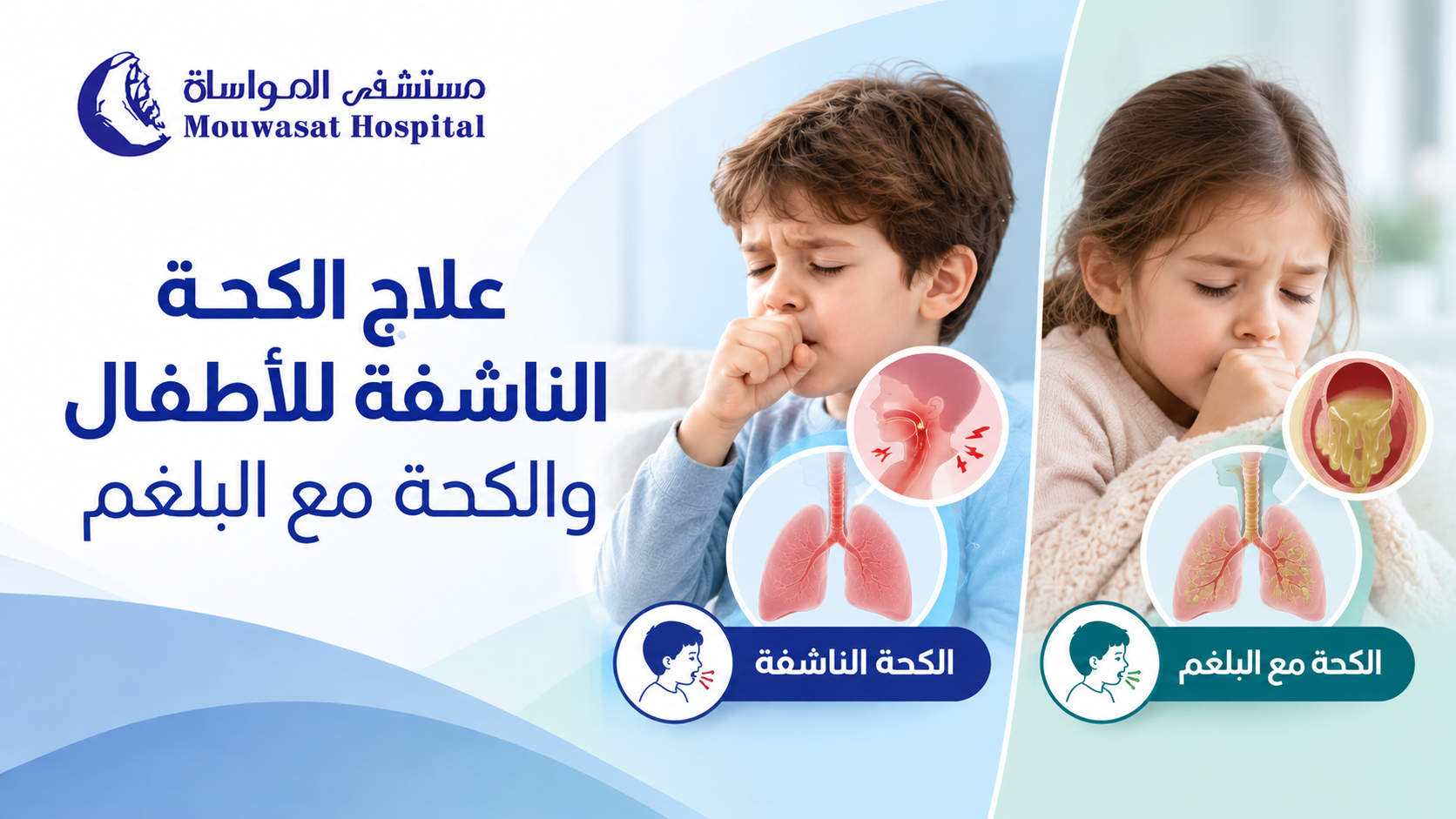

When a child develops a cough, parents often try to classify it first: is it a dry cough or a wet, phlegmy cough? That distinction can be useful, but it does not tell you the diagnosis or treatment by itself.
Two children can have similar-sounding coughs for completely different reasons. What matters is not only whether mucus is present, but also how long the cough has lasted, how it started, the child's age, breathing pattern and associated symptoms.
For the broader overview, see our guide to child cough treatment by cough type, age and associated symptoms.
Coughing is a protective reflex that helps clear mucus and irritants from the airways. A dry cough produces no obvious mucus, while a wet cough sounds as though respiratory secretions are being moved. [1]
| Feature | Dry cough | Wet cough |
|---|---|---|
| Sound | Dry, irritating or tickly without obvious secretions. | Sounds as though mucus or secretions are present. |
| Possible associations | Viral or post-viral cough, airway irritation, allergy, asthma and other causes. | Respiratory infections and, when persistent, several airway or lung conditions. |
| Does the type determine treatment? | No. The cause and clinical context come first. | No. Mucus alone does not mean antibiotics are required. |
| What else matters? | Duration, breathing, age, onset, timing and associated symptoms. | |
A wet cough that started four days ago with a cold is very different from a daily wet cough lasting more than four weeks. Duration can change the meaning of the symptom.
Pediatric cough guidelines recommend interpreting whether a cough is wet or dry alongside its duration, onset, timing and associated clinical history. [2]
A dry cough therefore does not automatically mean allergy or asthma, just as a wet cough does not automatically mean bacterial infection.
Dry cough can occur with viral illness or remain after an infection, while asthma, allergens and airway irritants are other possibilities. A wet cough can simply be part of an acute viral respiratory infection in which coughing helps clear secretions.
Most short-lasting coughs in otherwise well children are associated with viral respiratory infections and resolve without specific treatment. A dry cough can sometimes remain after other cold symptoms have improved. [2]
Cough can occur with asthma, particularly when there is wheezing, breathlessness or symptoms associated with exercise or recurring at characteristic times. However, cough alone does not diagnose asthma.
Smoke, dust, strong fumes, passive smoking and allergens may irritate a child's airways and trigger coughing.
A cough that begins suddenly while a child is eating or playing with a small object should not be assumed to be a routine dry cough. An inhaled foreign body needs to be considered.

A wet cough is not automatically more serious than a dry cough. During respiratory infections, coughing helps move secretions from the airways, so completely suppressing the cough is not always the goal. [4]
Young children also commonly swallow mucus rather than spit it out, so parents may hear a wet cough without seeing any sputum.
This can occur during viral respiratory infections and usually improves as the illness resolves.
This is where the pattern changes. Pediatric guidelines define a daily cough lasting more than 4 weeks as chronic cough and recommend further assessment. [2] [3]
Several conditions can cause chronic wet cough in children. One is protracted bacterial bronchitis (PBB), but other causes must also be considered by a clinician. The condition should not be diagnosed from mucus or cough sound alone.
A wet cough for four days and a daily wet cough for four weeks are not the same clinical situation. Sometimes duration matters more than how dramatic the cough sounds.
CHEST pediatric guidelines define chronic cough as a daily cough lasting more than 4 weeks. [3]
| Pattern | What it may mean practically |
|---|---|
| Short cough with cold symptoms in a well child | Often viral and gradually resolves. |
| Dry cough continuing after a cold | May be post-viral, but persistent or changing symptoms should be assessed. |
| Daily wet cough for more than 4 weeks | Requires medical assessment to establish the cause. |
| Recurring cough at night or with exercise plus wheeze or breathlessness | May warrant assessment for an airway condition such as asthma. |
If coughing becomes particularly noticeable during sleep, see: Child Cough at Night May Be More Than Just a Cold.
Not necessarily.
Mucus can become yellow or green during viral respiratory infections. Color alone does not establish that an infection is bacterial or that antibiotics are required. The American Academy of Pediatrics specifically notes that yellow or green mucus does not automatically mean a child needs antibiotics. [5]
Antibiotic decisions should therefore be based on the diagnosed condition, examination and overall clinical picture rather than mucus color alone.
It can be, but the underlying cause determines the treatment more than the label “dry” or “wet.”
For a simple viral cold, supportive care may be enough. If the cough is related to asthma, allergy, a specific infection or another condition, treatment is directed toward that cause.
Over-the-counter cough and cold medicines are not automatically appropriate for children. The American Academy of Pediatrics does not recommend them for children younger than 4 years, and from ages 4 to 6 they should only be used when recommended by the child's doctor. [4]
That question assumes the sound of the cough is the diagnosis. A safer starting point is the child's age, breathing, duration of symptoms and associated signs.
For age-appropriate supportive care, see: Child Cough Home Treatment: What Helps and What to Avoid.
Regardless of cough type, seek medical assessment when a child develops concerning features such as:
Distinguishing between dry and wet cough is useful, but it is only one part of pediatric cough assessment. A dry cough is not automatically asthma or allergy, and a wet cough is not automatically a bacterial infection.
The factors that change the next step are the likely cause, duration, breathing pattern, timing, onset and associated symptoms. One particularly important distinction is between a short wet cough during a cold and a daily wet cough persisting beyond 4 weeks.
Mouwasat Hospital's Pediatric Department provides care for common and specialized childhood conditions, including respiratory illnesses and pediatric pulmonology services.

Neither is automatically more serious. Severity depends more on breathing, the child's overall condition, duration and associated symptoms than on whether mucus is present.
A wet cough may sound deeper or as though mucus is moving in the airway. Young children often swallow mucus instead of coughing it out, so visible sputum is not required.
Yes. The character of a cough can change during a respiratory illness as airway secretions and inflammation change.
A daily wet cough persisting for more than 4 weeks warrants medical assessment, particularly if it is associated with breathing difficulty, recurrent pneumonia, blood, poor growth or other concerning symptoms.
No. Asthma can cause cough, but viral infections, allergies, irritants and other conditions can also cause a dry cough. Other symptoms and clinical assessment are needed.
No. Green or yellow mucus can occur during viral infections and does not by itself prove that antibiotics are needed. [5]