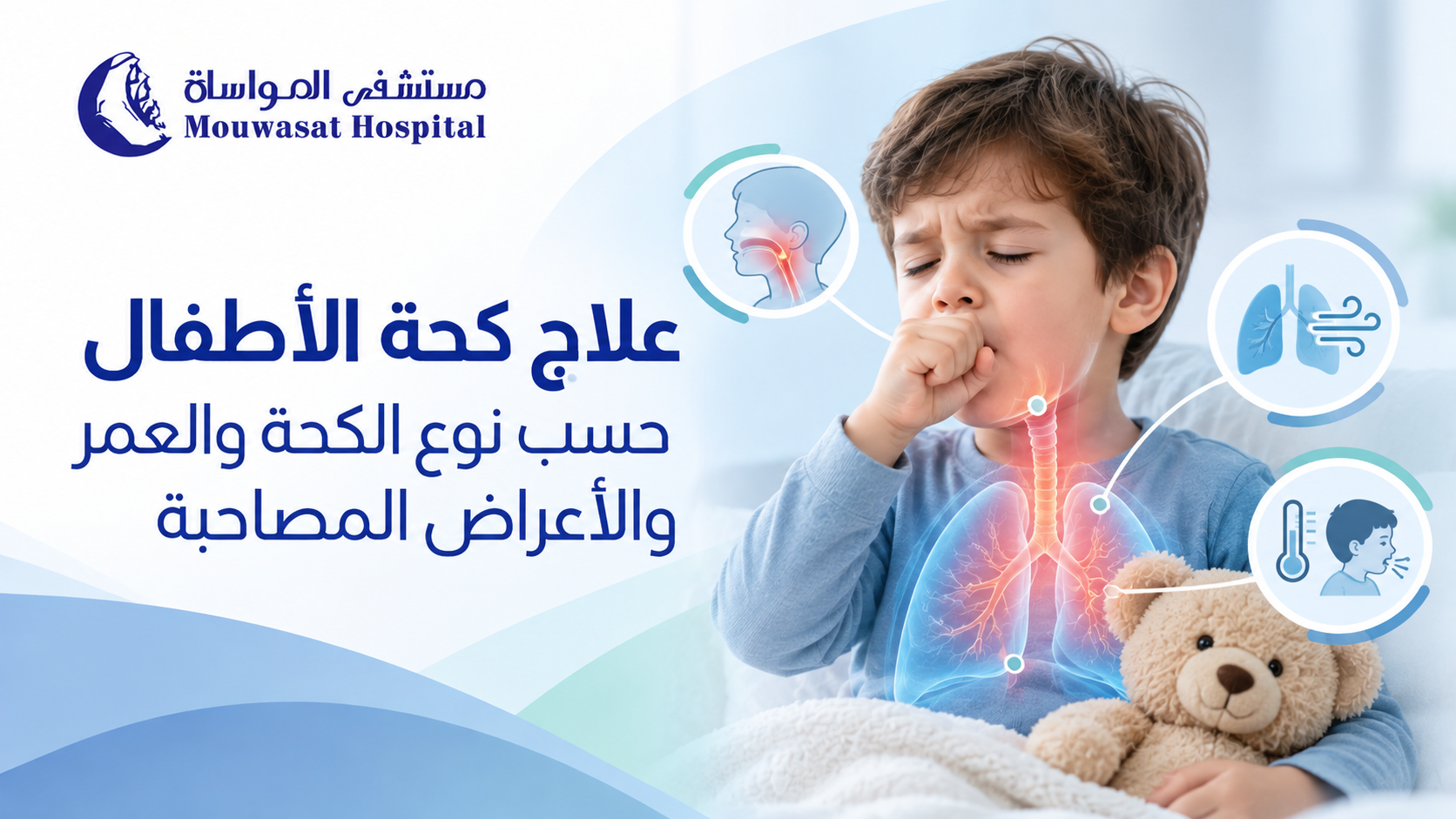

When a child starts coughing, parents often want to know the fastest or best child cough treatment. But cough treatment should not begin with choosing a cough syrup. A cough is a symptom and a protective reflex, and its causes range from a simple viral cold to asthma, allergies, respiratory infections and, less commonly, an inhaled foreign object.
The safest approach therefore depends on the child's age, breathing, how long the cough has lasted, how it started, and the symptoms occurring with it.
Coughing is a natural protective reflex that helps clear mucus, irritants and other material from the throat and airways. [1]
This means that completely suppressing a cough is not always the goal. In some situations, coughing is helping the body clear respiratory secretions.
| Factor | Why it matters |
|---|---|
| Age | Infants, particularly very young babies, require greater caution with respiratory symptoms and fever. |
| Breathing | Fast, labored breathing or chest indrawing may be more important than the sound or frequency of the cough. |
| How it started | A sudden cough while eating or playing with small objects raises concern for an inhaled foreign body. |
| Duration | A cough lasting weeks needs a different assessment from a cough that began two days ago with a cold. |
| Overall condition | A child who is playing, drinking and breathing normally is different from one who is lethargic or unable to drink. |
A cough can sound dramatic without being dangerous. Breathing effort, alertness, hydration and associated symptoms often tell you more than the loudness of the cough.
The character of a cough can provide useful clues, but it does not diagnose the cause on its own.
A dry cough produces little or no obvious mucus and may occur with viral infections, throat irritation, allergies, asthma and other conditions.
A productive cough helps move respiratory secretions. The presence of mucus does not automatically mean that antibiotics are required.
Wheezing may occur when the lower airways narrow and can be seen with asthma and some respiratory infections. Recurrent wheezing or breathing difficulty deserves medical assessment.
A barking cough with hoarseness or a harsh sound when breathing in may occur with croup.
A sudden coughing episode while eating or playing with small objects raises concern for a foreign object entering the airway.
Read more in: Dry Cough or Phlegmy Cough in Children: The Difference That Changes the Approach.
Honey should not be given to infants younger than 12 months because of the risk of infant botulism. Extra caution is also needed before giving cough or cold medication to babies and young children. [3]
A small amount of honey may help soothe coughing in children over 1 year of age and may reduce nighttime coughing. [3]
Many cough and cold products contain more than one active ingredient. This can increase the risk of accidentally giving the same medicine twice through different products. [4]

When a child is breathing comfortably, drinking adequately and has no warning signs, supportive home care may be enough for many viral colds.
Adequate fluids help prevent dehydration and can keep respiratory secretions less thick.
Honey may soothe coughing in children over 1 year old, but should never be given to an infant younger than 12 months. [3]
Saline drops or spray and gentle removal of nasal secretions can be useful, particularly in younger children. [4]
A clean cool-mist humidifier may help when indoor air is dry. It should be cleaned regularly to prevent contamination. [4]
Children should be protected from cigarette and shisha smoke and other strong respiratory irritants.
For a more detailed guide, see: Child Cough Home Treatment: What Helps and What to Avoid.
There is no single cough syrup that is the best treatment for every child.
The Saudi Ministry of Health notes that cough medicine is not always necessary and does not recommend cough and cold medicines for children under 6 in the context of common viral respiratory illness. [1] [2]
The FDA also warns against cough and cold products containing decongestants or antihistamines in children younger than 2 because serious adverse effects can occur, while manufacturers commonly label these products not to be used in children younger than 4. [4]
What is causing the cough, how old is the child, and are there signs that the underlying condition needs treatment rather than simply suppressing the cough?
Most coughs associated with common colds do not.
Colds and many acute respiratory illnesses are caused by viruses, which antibiotics cannot treat. Antibiotics are used when a bacterial infection is diagnosed or strongly suspected by a clinician.
The color of mucus or the strength of the cough alone is not enough to decide that antibiotics are needed.
Not necessarily. Mucus color alone cannot reliably determine whether an infection is bacterial or viral. The child's age, fever, breathing, overall condition and medical examination matter more.
A cough can remain after other cold symptoms begin to improve. The American Academy of Pediatrics notes that coughing associated with a cold may commonly last around 2 to 3 weeks. [5]
A cough that persists for much longer, becomes progressively worse, or is associated with recurrent wheeze, breathing difficulty or other concerning symptoms should be evaluated.
Nighttime cough can become more noticeable because of nasal secretions draining toward the throat while lying down, but asthma, allergies, reflux and other conditions may also contribute.
A cough being worse at night does not automatically mean that the illness is more severe, but a repeated nighttime pattern can provide useful diagnostic information.
Read: Child Cough at Night May Be More Than Just a Cold.
| Situation | Possible next step |
|---|---|
| Active child, drinking normally, comfortable breathing and cough started with a cold | Supportive home care and monitoring may be appropriate. |
| Persistent or worsening cough, recurring wheeze, persistent fever or significant sleep/activity disruption | Pediatric assessment is appropriate to identify the cause. |
| Fast or labored breathing, chest indrawing or difficulty feeding/drinking | Urgent medical evaluation is needed. |
| Blue lips, severe breathing difficulty, pauses in breathing, marked lethargy or difficulty waking | Seek emergency medical care immediately. |
The World Health Organization identifies fast breathing and lower chest indrawing as important signs when evaluating a child with cough or difficult breathing, while inability to drink and marked lethargy are among important danger signs. [6]
Medical assessment is appropriate when the cough is getting worse instead of improving, lasts much longer than expected, is associated with repeated wheezing, persistent fever, reduced activity or feeding, or began suddenly after a choking episode.
Mouwasat Hospital's Pediatric Department provides care for common and specialized childhood conditions, including respiratory illnesses and Pediatric Pulmonology services.

There is no single immediate treatment for every cough. With a simple cold, fluids, saline nasal care, cool-mist humidification and honey after age 1 may help. Other causes such as asthma or pneumonia require treatment of the underlying condition.
It may help children aged 1 year and older. Honey must not be given to babies younger than 12 months because of the risk of infant botulism. [3]
Not necessarily. The presence of mucus alone does not determine severity. Breathing, alertness and associated symptoms are more important.
No. Asthma is one possible cause, but colds, nasal drainage, allergies and other conditions can also cause nighttime coughing.
Not necessarily. Mucus color alone is not enough to diagnose a bacterial infection or decide that antibiotics are required.
The cough becomes particularly concerning when accompanied by significant breathing difficulty, blue lips, chest indrawing, marked lethargy, inability to drink, or sudden onset following choking.