
When a child's temperature rises, parents understandably want to know how to bring the fever down quickly. The safest approach, however, is not to force the thermometer back to 37°C as fast as possible.
Good fever care starts by asking whether the child appears well enough for home care or has warning signs that require medical assessment. The main goals are to keep the child comfortable, maintain hydration and monitor their overall condition. A fever falling after medicine does not prove that the illness is minor, and a fever that does not fall quickly does not by itself mean that the illness is serious. [1]
If your child is stable and has no warning signs, the fastest appropriate response is not an ice bath, cold compresses or a home remedy. Focus first on comfort, hydration and observation.
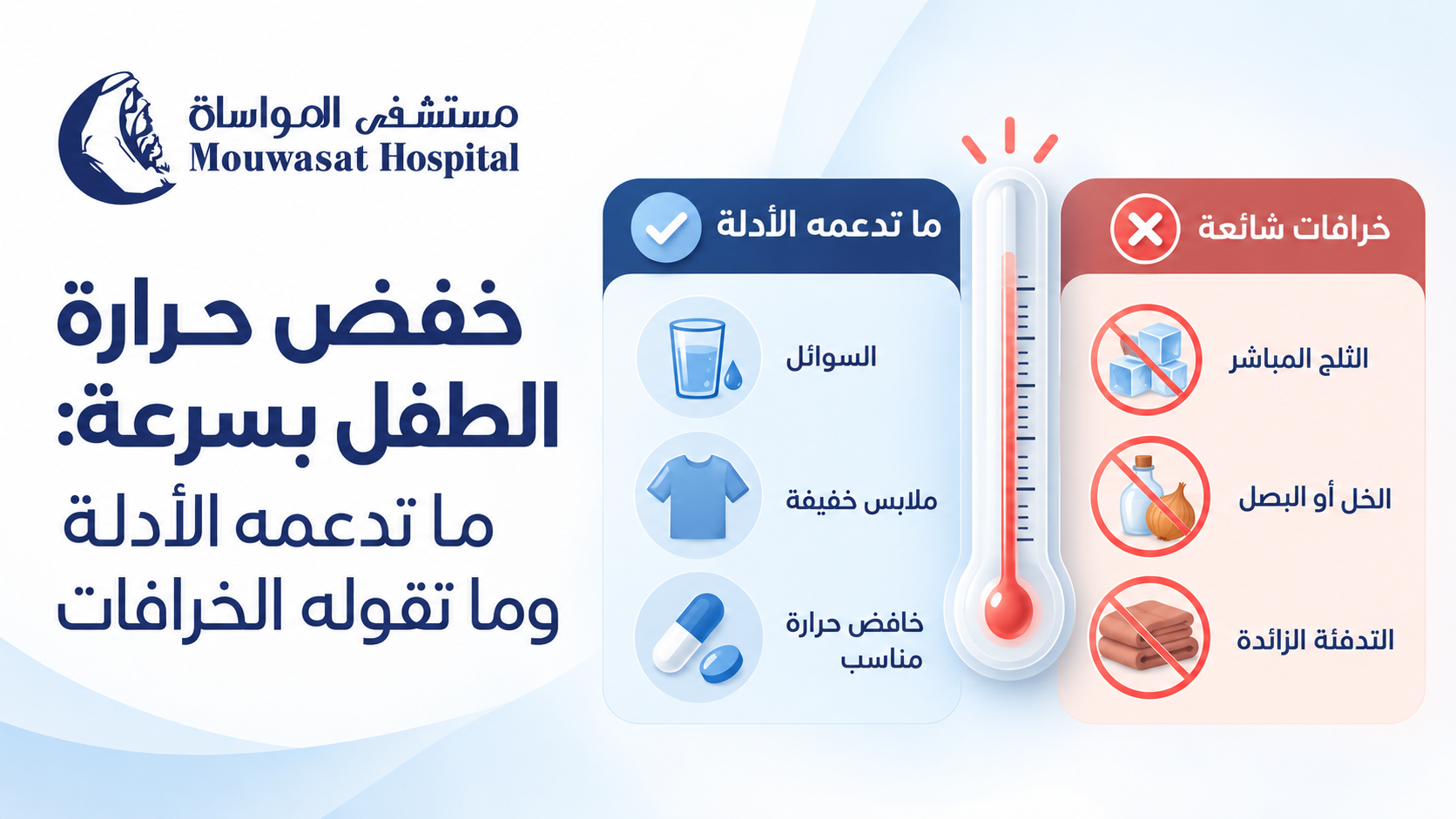
The NHS recommends regular fluids, continued breastfeeding, monitoring for dehydration and avoiding excessive clothing or bedding during a fever. [2]
Children can lose more fluid when they have a fever. Offer age-appropriate fluids regularly and continue normal breastfeeding or milk feeds in infants.
Watch for warning signs of dehydration such as a dry mouth, reduced tears, fewer wet nappies or reduced urination, and unusually low activity. Both NICE and the American Academy of Pediatrics emphasise hydration during fever care. [1] [3]
Do not wrap your child in heavy blankets in an attempt to make them sweat. At the same time, aggressive undressing is not necessary. Use comfortable clothing appropriate for the room temperature.
NICE advises that children with fever should be neither underdressed nor over-wrapped. [1]
A child with a temperature of 38.5°C who remains alert, drinks and interacts can look very different from another child with a lower temperature who is unusually sleepy, dehydrated or struggling to breathe.
Monitor alertness, breathing, drinking, urination, skin colour and associated symptoms as well as the temperature itself.
If you are unsure whether a reading is actually abnormal, see our guide to normal temperature in children and how the measurement site changes the reading.

NICE recommends considering either paracetamol (acetaminophen) or ibuprofen when a child with fever appears distressed or uncomfortable. Fever medicine should not be used solely to reduce the thermometer reading. [1]
This distinction matters. Fever-reducing medicine can make a child feel better, but it does not necessarily treat the cause of the illness or shorten its duration. [3]
NICE advises against giving both medicines at the same time. Changing from one medicine to the other or alternating them may only be considered in specific circumstances when distress continues or returns before the next dose is due. The NHS also advises parents not to alternate them unless a doctor or nurse recommends it. [1] [2]
Always check whether another cold, pain or fever product already contains the same active ingredient before giving more than one medicine.
Parents often become more worried when a fever remains high or decreases only slightly after medicine.
Avoid two common mistakes:
NICE specifically advises healthcare professionals not to use a decrease—or lack of decrease—in temperature after antipyretic medicine to distinguish serious from non-serious illness. [1]
Instead, look at your child. Are they more comfortable? Are they drinking? Are they alert and interacting? Is their breathing normal? Have any new warning signs appeared?
For a broader guide to interpreting fever by age and symptoms, see child fever treatment by age, temperature and symptoms.
Cooling the skin is traditionally used to bring a fever down, but modern guidelines do not recommend physical cooling as the main treatment for routine fever.
NICE does not recommend tepid sponging for treating fever, and the NHS advises against sponging or undressing a child in an attempt to cool them. [1] [2]
Fever is not simply excess heat sitting on the skin. During an infection, the body's temperature regulation changes. Aggressive external cooling may therefore cause discomfort or shivering without treating the underlying cause.
Not necessarily. A comfortable lukewarm bath may feel pleasant to some children, but it should not be used aggressively to chase a thermometer number. Cold water and ice baths should be avoided because they can cause shivering and discomfort. [3]
Saudi Ministry of Health guidance mentions room-temperature water compresses in the specific context of care after a febrile seizure has stopped. That does not mean compresses are the primary treatment for every childhood fever. [5]
A home remedy can be popular in search results without being proven safe or effective. Fever care should distinguish evidence-supported measures from traditional practices.
| Remedy | What the evidence says | Better approach |
|---|---|---|
| Vinegar compresses | Vinegar compresses should not be used to treat fever. Chemical burns have been reported after using vinegar in an attempt to lower fever. [6] | Avoid vinegar and use evidence-based fever care. |
| Rubbing alcohol | Unsafe. Isopropyl alcohol can be inhaled or absorbed through the skin and can cause poisoning. [7] | Never use rubbing alcohol on a child's body to reduce fever. |
| Lemon | A 2026 study reported a temperature reduction after a lemon juice and coconut oil compress, but it used a one-group pre-test/post-test design without a control group. This is not enough to establish effectiveness or overturn current guideline-based fever care. [8] | Do not treat lemon compresses as an established childhood fever therapy. |
| Onion on the feet | This is not part of recommended fever management in NICE, NHS or AAP guidance. | Do not rely on it or allow it to delay appropriate assessment. |
| Olive oil or other oils on the skin | These are not recommended fever-reduction treatments in the clinical guidelines used for this article. | Do not substitute topical oils for recommended fever care. |
| Ice or very cold water | Cold exposure can cause shivering and discomfort and does not treat the cause of the fever. [3] | Avoid aggressive cooling. |
Repeatedly checking the thermometer and trying to reach a specific number can distract from more important signs such as alertness, breathing and hydration.
Antipyretic medicines are mainly intended to relieve distress and discomfort rather than simply normalise body temperature. [1]
Do not change the dose or timing based on one temperature reading. Follow approved instructions and professional advice.
Some cold, flu and pain products may contain paracetamol or another ingredient already given separately. Always check the label.
Alternating medicines can increase the chance of timing or dosing errors and is not a routine approach for every child with fever. [1] [2]
These practices are either unsupported as routine fever treatment or, in the case of vinegar and rubbing alcohol, can cause direct harm. [6] [7]
A falling temperature does not rule out serious illness. Warning signs should be acted on regardless of the response to fever medicine. [1]

No. This is an important misconception because fear of seizures can lead parents to aggressively cool a child or repeatedly give fever medicine.
NICE states that antipyretic medicines do not prevent febrile seizures and should not be used specifically for that purpose. The American Academy of Pediatrics likewise notes that acetaminophen and ibuprofen may lower fever and improve comfort but do not prevent febrile seizures. [1] [4]
If a seizure occurs, do not try to force medicine into the child's mouth and do not put any object between their teeth. Managing the seizure safely becomes the immediate priority.
See our dedicated guide: febrile seizures in children: what to do in the first few minutes.
Seek medical assessment if:
In children older than 6 months, NICE advises that the height of the temperature alone should not be used to identify serious illness. The child's overall condition and accompanying symptoms remain essential. [1]
If you are trying to reduce your child's fever quickly, do not let speed lead to vinegar, rubbing alcohol, ice baths, extra medicine or unsupervised alternating of medicines.
Start by checking for warning signs. Then focus on fluids, breastfeeding, rest and comfortable clothing. If your child is distressed, an appropriate fever medicine may be used according to approved instructions and professional advice.
Remember that the response to fever medicine is not a test of how serious an illness is. The real goal is a more comfortable, adequately hydrated child whose overall condition is being monitored—not a thermometer forced back to 37°C.
For specialist assessment, visit Pediatrics at Mouwasat Hospital.