How can i help you?
Latest Blogs
Explore All


Under the supervision of Dr. Mostafa Khaled Zeitouni, Consultant in Cardiology, Vascular Diseases, and Electrophysiology, the medical team successfully performed an advanced ablation procedure to treat a heart rhythm disorder for a woman in her 40s who had been suffering from palpitations and severe tachycardia, significantly impacting her quality of life.
The patient was received at the Emergency Department of Al-Mouwasat Hospital in Madinah, where the emergency doctors and the on-call cardiologist urgently intervened to stop the severe tachycardia. Subsequently, a treatment plan was developed to permanently resolve the issue in collaboration with the cardiac electrophysiology consultant.
It was revealed that the patient had visited several hospitals, where the tachycardia was only managed with medications due to the unavailability of a cardiac electrophysiology specialty at those facilities.
After a precise diagnosis and the creation of a comprehensive treatment plan, the team employed the latest technology, including 3D electrocardiography, a specialized dual catheterization device, and specialized catheters for studying the heart's electrical and physiological functions. The heart was stimulated to identify the type of pathological tachycardia, and the procedure was successfully completed due to reliance on specialized skills and modern technology.
The patient returned to her normal condition within 24 hours of the procedure and was provided with necessary medication and scheduled follow-up appointments at the hospital’s outpatient clinic.
It is worth noting that this type of procedure, in such a rare specialty, is among the most advanced in cardiology, aligning with Al-Mouwasat Medical Services Company’s vision to attract highly skilled specialists and provide the latest medical technologies and equipment.
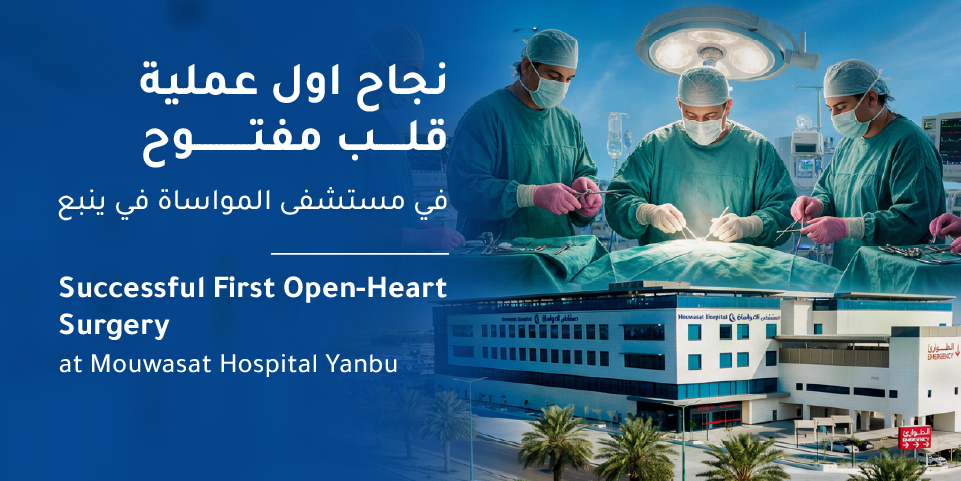
The Cardiac Surgery team at Mouwasat Hospital in Yanbu achieved a significant medical milestone by performing the hospital’s first open-heart surgery. The procedure was a coronary artery bypass graft surgery for a patient in his sixties who was suffering from severely impaired left ventricular function, along with chronic obstructive pulmonary disease and a high level of risk associated with his medical condition.
The patient arrived at the Emergency Department in critical condition, suffering from severe shortness of breath and chest pain. Detailed medical examinations revealed severe narrowing of the left main coronary artery, in addition to multiple blockages in other coronary arteries, with a significant deterioration in heart muscle function.
Due to the complexity of the case and the high level of risk, the patient was urgently evaluated by the Cardiac Surgery Department and the Cardiology and Interventional Catheterization Department at Mouwasat Hospital in Yanbu. His condition was comprehensively assessed, available treatment options were discussed, and all requirements and preparations necessary to perform the surgery at the hospital were evaluated.
Following a thorough assessment of the case and coordination among the concerned medical teams, the decision was made to perform the surgical intervention within a period not exceeding 24 hours, making the patient the first case to undergo open-heart surgery at Mouwasat Hospital in Yanbu. The medical team explained the nature of his health condition, the risks associated with surgery, and the available treatment options, after which the patient agreed to undergo the urgent procedure.
The operation involved coronary artery bypass graft surgery despite the presence of severe impairment of heart muscle function, deterioration in lung function, and chronic obstructive pulmonary disease. The patient was also suffering from recently diagnosed uncontrolled diabetes and significantly elevated blood glucose levels. The procedure aimed to restore blood flow through the coronary arteries and improve blood supply to the heart muscle.
By the grace of God first, followed by the expertise of the Cardiac Surgery team and the integration among the medical teams, the operation was successfully completed. The patient recovered after surgery without complications and was discharged from the hospital after only five days in stable condition, allowing him to return to his normal life.
This achievement was made possible, by the grace of God first, through specialized medical expertise and the integration of the Cardiology, Cardiac Surgery, and Interventional Catheterization departments, alongside the availability of modern medical capabilities and equipment. This further strengthens Mouwasat Hospital’s ability to provide advanced services for critical and complex cases in accordance with the highest standards of medical quality and safety.
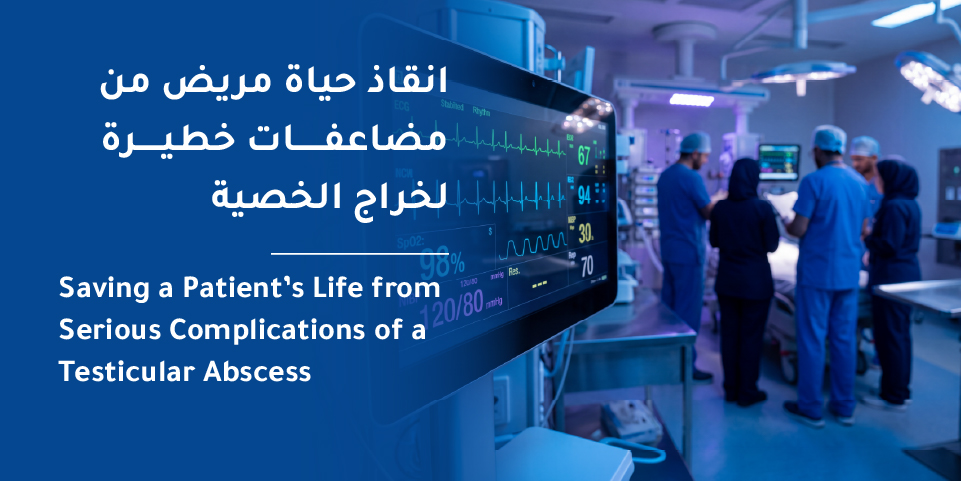
An integrated medical team at Mouwasat Hospital Yanbu successfully saved the life of a patient with diabetes who arrived at the hospital in critical condition after suffering from severe pain and significant swelling in the groin area, along with a sharp rise in blood infection markers.
Following thorough medical examinations, the patient was diagnosed with a scrotal pyocele. Despite the immediate initiation of conservative treatment and strong antibiotics, the patient did not respond to treatment, and his condition continued to deteriorate, creating an imminent risk of progression to life-threatening Fournier’s gangrene.
Surgical intervention presented a major challenge due to the patient’s impaired heart muscle function, which increased the risks associated with anesthesia and surgery. Given the complexity of the case, the medical team held a multidisciplinary meeting involving physicians from Urology, Anesthesia, Intensive Care, Nephrology, and hospital management to assess the case and discuss the available treatment options.
After a comprehensive evaluation, the medical team agreed that surgical intervention represented the final option to save the patient’s life. The potential cardiac and anesthesia-related risks were explained to the patient and his family, who expressed their confidence in the medical team and agreed to proceed with the operation.
During surgery, the medical team faced an additional challenge when the patient developed instability in his vital signs and heart rate. This required immediate intervention by the anesthesia team to manage the situation and maintain the patient’s stability, while the surgical team continued the procedure, successfully removing the abscess, cleaning the affected area, and placing a drainage tube.
After the operation, the patient was transferred directly to the Intensive Care Unit for close monitoring, including observation of heart function, vital signs, and blood glucose levels, alongside the necessary care throughout the recovery period.
By the grace of God first, followed by the rapid response to the case, the integration of different medical specialties, and the team’s expertise in managing critical and complex conditions, the medical team successfully overcame the challenges associated with the case. The patient regained consciousness, and his vital signs and overall health gradually stabilized until he recovered and left the Intensive Care Unit in stable condition.
This success reflects Mouwasat Hospital Yanbu’s continued commitment to providing advanced medical care for critical and complex cases through specialized medical professionals and multidisciplinary teams working in an integrated manner to provide patients with the highest levels of medical care.
An integrated medical team at Mouwasat Hospital Yanbu successfully saved the life of a patient with diabetes who arrived at the hospital in critical condition after suffering from severe pain and significant swelling in the groin area, along with a sharp rise in blood infection markers.
Following thorough medical examinations, the patient was diagnosed with a scrotal pyocele. Despite the immediate initiation of conservative treatment and strong antibiotics, the patient did not respond to treatment, and his condition continued to deteriorate, creating an imminent risk of progression to life-threatening Fournier’s gangrene.
Surgical intervention presented a major challenge due to the patient’s impaired heart muscle function, which increased the risks associated with anesthesia and surgery. Given the complexity of the case, the medical team held a multidisciplinary meeting involving physicians from Urology, Anesthesia, Intensive Care, Nephrology, and hospital management to assess the case and discuss the available treatment options.
After a comprehensive evaluation, the medical team agreed that surgical intervention represented the final option to save the patient’s life. The potential cardiac and anesthesia-related risks were explained to the patient and his family, who expressed their confidence in the medical team and agreed to proceed with the operation.
During surgery, the medical team faced an additional challenge when the patient developed instability in his vital signs and heart rate. This required immediate intervention by the anesthesia team to manage the situation and maintain the patient’s stability, while the surgical team continued the procedure, successfully removing the abscess, cleaning the affected area, and placing a drainage tube.
After the operation, the patient was transferred directly to the Intensive Care Unit for close monitoring, including observation of heart function, vital signs, and blood glucose levels, alongside the necessary care throughout the recovery period.
By the grace of God first, followed by the rapid response to the case, the integration of different medical specialties, and the team’s expertise in managing critical and complex conditions, the medical team successfully overcame the challenges associated with the case. The patient regained consciousness, and his vital signs and overall health gradually stabilized until he recovered and left the Intensive Care Unit in stable condition.
This success reflects Mouwasat Hospital Yanbu’s continued commitment to providing advanced medical care for critical and complex cases through specialized medical professionals and multidisciplinary teams working in an integrated manner to provide patients with the highest levels of medical care.
The Cardiac Surgery team at Mouwasat Hospital in Yanbu achieved a significant medical milestone by performing the hospital’s first open-heart surgery. The procedure was a coronary artery bypass graft surgery for a patient in his sixties who was suffering from severely impaired left ventricular function, along with chronic obstructive pulmonary disease and a high level of risk associated with his medical condition.
The patient arrived at the Emergency Department in critical condition, suffering from severe shortness of breath and chest pain. Detailed medical examinations revealed severe narrowing of the left main coronary artery, in addition to multiple blockages in other coronary arteries, with a significant deterioration in heart muscle function.
Due to the complexity of the case and the high level of risk, the patient was urgently evaluated by the Cardiac Surgery Department and the Cardiology and Interventional Catheterization Department at Mouwasat Hospital in Yanbu. His condition was comprehensively assessed, available treatment options were discussed, and all requirements and preparations necessary to perform the surgery at the hospital were evaluated.
Following a thorough assessment of the case and coordination among the concerned medical teams, the decision was made to perform the surgical intervention within a period not exceeding 24 hours, making the patient the first case to undergo open-heart surgery at Mouwasat Hospital in Yanbu. The medical team explained the nature of his health condition, the risks associated with surgery, and the available treatment options, after which the patient agreed to undergo the urgent procedure.
The operation involved coronary artery bypass graft surgery despite the presence of severe impairment of heart muscle function, deterioration in lung function, and chronic obstructive pulmonary disease. The patient was also suffering from recently diagnosed uncontrolled diabetes and significantly elevated blood glucose levels. The procedure aimed to restore blood flow through the coronary arteries and improve blood supply to the heart muscle.
By the grace of God first, followed by the expertise of the Cardiac Surgery team and the integration among the medical teams, the operation was successfully completed. The patient recovered after surgery without complications and was discharged from the hospital after only five days in stable condition, allowing him to return to his normal life.
This achievement was made possible, by the grace of God first, through specialized medical expertise and the integration of the Cardiology, Cardiac Surgery, and Interventional Catheterization departments, alongside the availability of modern medical capabilities and equipment. This further strengthens Mouwasat Hospital’s ability to provide advanced services for critical and complex cases in accordance with the highest standards of medical quality and safety.
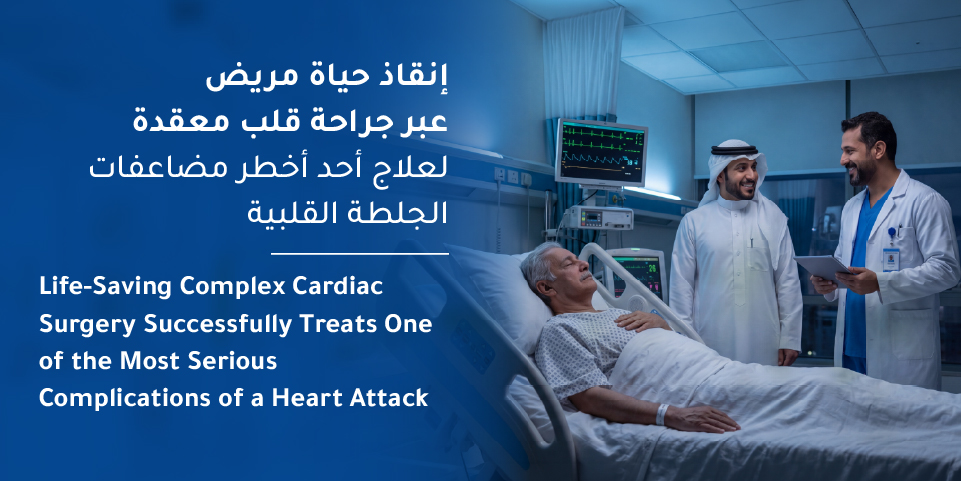
In a new medical achievement, the Cardiac Surgery team at Mouwasat Hospital in Riyadh successfully saved the life of a patient who arrived at the hospital in critical condition following an acute heart attack that resulted in a ventricular septal defect, accompanied by cardiogenic shock and severe pulmonary congestion, which are among the serious complications that may occur following myocardial infarction.
The patient’s treatment journey began with an urgent intervention by the cardiac catheterization team under the supervision of Dr. Saleh Alghofaili, Consultant Interventional Cardiologist. A successful therapeutic catheterization procedure was performed, during which stents were placed in the coronary arteries to restore blood flow to the heart muscle.
Due to the severe deterioration in blood circulation, cardiac function was supported using an Intra-Aortic Balloon Pump to help improve blood pumping and enhance cardiac perfusion. Afterwards, the Intensive Care team, led by Dr. Haitham Othman, Consultant and Head of the Intensive Care Department, closely and intensively monitored the patient’s condition for two weeks until the patient stabilized and became ready for surgical intervention.
After the patient’s condition stabilized, the Cardiac Surgery team, under the supervision of Dr. Waleed Alayadhi, Consultant Cardiac Surgeon, and with the participation of Dr. Mohamed Ali, Cardiac Surgery Specialist, and Dr. Adel Al-Jabali, Consultant Cardiac Anesthesiologist, performed a high-risk surgical procedure that included closing the ventricular septal defect and reconstructing the damaged part of the left ventricle caused by the heart attack, using advanced surgical techniques aimed at improving the efficiency of the heart muscle and restoring its functions.
By the grace of God, the operation was successful, and the patient showed good improvement in his health condition. He was transferred from the Intensive Care Unit to the inpatient ward one week after the operation in stable condition to complete the remaining stages of treatment and rehabilitation.
This success highlights the importance of integration among various medical specialties in managing critical and complex cardiac cases, starting with catheterization and intensive care and extending to cardiac surgery and anesthesia.
It also reflects Mouwasat Medical Services Company’s commitment to providing specialized medical expertise and subspecialties, alongside the latest technologies and equipment, enhancing its ability to manage critical and complex cases and provide patients with the best opportunities for treatment.
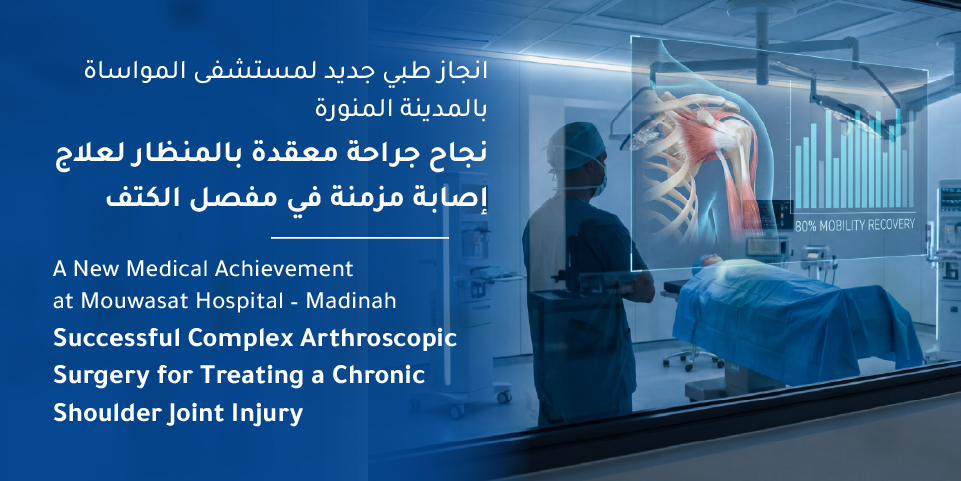
Madinah – Mouwasat Hospital
Mouwasat Hospital in Madinah has recorded a remarkable medical achievement in the Department of Orthopedic Surgery, following the successful performance of a complex and advanced arthroscopic procedure to treat a chronic injury of the shoulder joint.
The procedure was performed on a patient in his early thirties who had been suffering from chronic shoulder pain, weakness, and instability in the right shoulder.
The patient had previously sustained an old shoulder dislocation and underwent a surgical procedure five years ago to repair torn shoulder tendons. However, his condition did not improve, and the pain persisted, with symptoms progressing to significant muscle weakness and reduced range of motion in the shoulder and arm.
Following a thorough clinical examination and detailed radiological assessment, the diagnosis revealed a neglected complete tear of the subscapularis tendon with associated muscle atrophy due to the prolonged duration of injury.
The medical team, led by Dr. Ahmed Al‑Shazly, Consultant Orthopedic Surgeon, explained the details of the condition to the patient, discussed the available treatment options, and outlined the expected outcomes.
Based on the complexity of the case and the degree of functional impairment, it was decided to proceed with advanced arthroscopic surgical intervention.
The patient underwent a highly delicate surgical procedure that lasted approximately three hours, which included:
This complex procedure required a high level of surgical expertise and technical precision due to the chronic nature of the injury and the presence of muscle atrophy.
By the grace of God, the patient was discharged from the hospital in good health and without any complications.
During the first postoperative follow‑up the next day, clinical assessment showed a clear improvement in the shoulder’s range of motion.
Physiotherapy sessions were initiated four weeks after surgery. Upon completion of the full rehabilitation program, the patient successfully regained approximately 80% of shoulder muscle strength and range of motion.
This type of advanced surgical procedure reflects the high level of precision and modern technology available at Mouwasat Hospitals, as well as the specialized expertise of its orthopedic and joint surgery teams. It further underscores the hospital’s dedication to providing the highest standards of medical care, contributing to improved patient outcomes and quality of life.