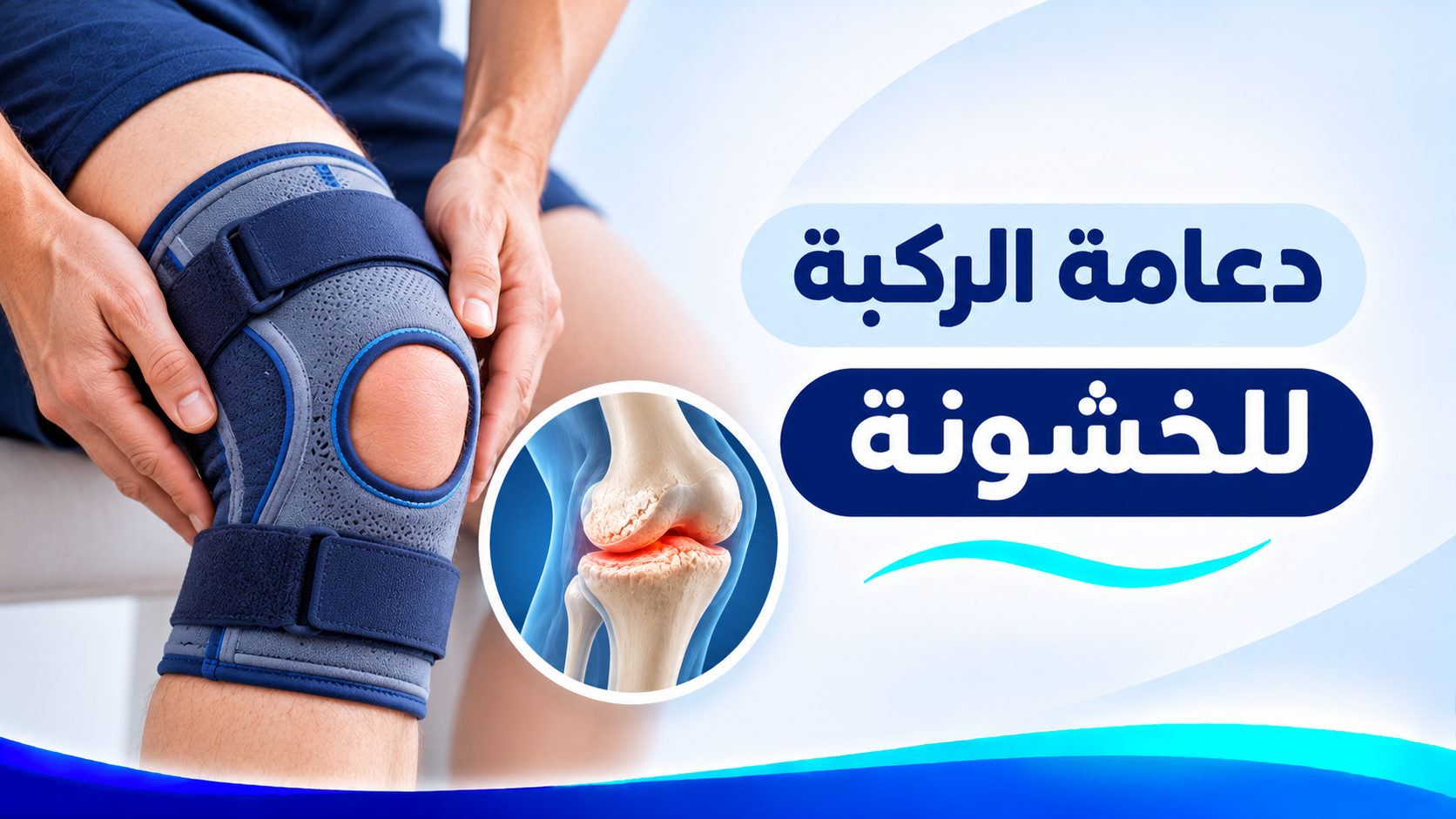

A knee brace may help reduce pain, improve joint stability, and make walking more comfortable for some people with knee osteoarthritis. However, not every patient needs a brace, and different designs serve different purposes.
Some knee braces provide gentle compression and a sense of support, while others are designed to improve mechanical stability or redistribute loads away from the most affected compartment of the knee.
Choosing an appropriate brace depends on the location of osteoarthritis, joint stability, leg alignment, and the impact of symptoms on movement and daily activities. [1] [2]
A knee brace, also known as a knee orthosis, is an external device worn around the knee to provide support, improve movement control, or modify the mechanical forces acting on the joint.
Depending on its purpose, a brace may contain elastic fabric, adjustable straps, rigid components, or mechanical hinges.
Braces intended for osteoarthritis differ from those used to immobilize the knee following certain ligament injuries or surgical procedures. Restricting normal joint movement is not usually the primary goal of osteoarthritis bracing.
For a broader overview of the condition, see Knee Osteoarthritis: Does Walking Help or Make Pain Worse?.
An appropriately selected brace may provide several benefits, particularly when symptoms are associated with joint instability or abnormal mechanical loading.
Potential benefits include:
These benefits are not identical for every patient. Outcomes depend on the underlying joint condition, brace design, fit, comfort, and ability to use the device consistently.
Clinical evidence suggests that bracing may improve pain and function in selected patients, although results vary across studies and brace designs. [3] [4]
Knee braces are not interchangeable. Each design has particular mechanical characteristics and potential clinical applications.
| Brace type | Primary function | Potential applications |
|---|---|---|
| Elastic knee sleeve | Provides gentle compression and a sense of support. | When lightweight support is desirable without substantially restricting movement. |
| Adjustable wraparound brace | Provides adjustable compression and fit. | When adjustable support is appropriate for the patient's needs. |
| Hinged knee brace | Provides lateral support while allowing movement according to its design. | Selected cases involving joint instability after clinical assessment. |
| Unloader knee brace | Redistributes forces away from an affected knee compartment. | Selected cases of medial or lateral compartment osteoarthritis. |
| Patellofemoral brace | Provides targeted support around the kneecap. | Selected patients with patellofemoral osteoarthritis. |
Knee immobilizers and braces that substantially restrict movement are intended for particular medical indications, including certain injuries and postoperative situations. They should not be used independently simply because osteoarthritis is present.
The knee has several joint compartments, including:
In some patients, osteoarthritis predominantly affects one tibiofemoral compartment, contributing to pain during weight-bearing activities.
An unloader brace is designed to modify the forces acting across the knee and reduce loading of the affected compartment during selected activities.
A valgus unloader brace may be appropriate for selected patients with medial compartment knee osteoarthritis, particularly when accompanied by varus alignment, commonly described as a bow-legged alignment.
A brace applying a corrective force in the opposite direction may be considered in selected cases of lateral compartment osteoarthritis.
The direction and amount of correction should be determined professionally. A device that is unsuitable for the patient's alignment or affected compartment may cause discomfort or aggravate symptoms. [4] [5]
Patellofemoral braces are designed to provide targeted support around the kneecap and the joint between the patella and femur.
People with patellofemoral osteoarthritis may experience discomfort when climbing stairs, rising from a chair, or sitting with the knee bent for prolonged periods.
However, these symptoms are not specific to osteoarthritis and can also result from other knee conditions.
The American College of Rheumatology conditionally recommends patellofemoral bracing for selected patients, recognizing that effectiveness and tolerance may vary. [2]
Recommendations differ in strength and scope between clinical guidelines, highlighting the importance of individualized assessment.
| Clinical organization | Recommendation |
|---|---|
| NICE | Braces should not be routinely offered. They may be appropriate for instability or abnormal loading when exercise alone is ineffective or unsuitable and the device is expected to improve movement and function. |
| ACR / Arthritis Foundation | Strongly recommends tibiofemoral bracing for suitable patients and conditionally recommends patellofemoral bracing. |
| AAOS | Bracing may be used to improve pain, physical function, and quality of life. |
| VA/DoD 2026 | Provides a weak recommendation in favor of bracing for selected patients, acknowledging limitations in the available evidence. |
A diagnosis of knee osteoarthritis therefore does not automatically mean that a brace is necessary. The decision should reflect a defined clinical need and a realistic expectation of functional improvement. [1] [2] [3] [4]
Discussing knee bracing with a healthcare professional may be appropriate when a person experiences:
Conversely, a patient with mild symptoms, satisfactory knee stability, and no important functional limitations may not need a brace.
Repeated episodes of the knee giving way require assessment of the underlying cause rather than simply purchasing additional support.

The best knee brace is not necessarily the most expensive or rigid device. It is the one that addresses the patient's clinical needs without causing unnecessary discomfort or restricting useful movement.
Important selection factors include:
Some knee braces feature an opening around the kneecap, while others cover the entire front of the knee.
The presence of an opening alone does not establish that one brace is more effective than another. Suitability depends on the overall design, clinical indication, and individual comfort.
The presence of magnets or copper-infused materials should not be interpreted as evidence that a brace can cure osteoarthritis or regenerate cartilage.
Assess a device according to its mechanical function, clinical suitability, and fit rather than relying solely on marketing claims.
Sizing methods vary between manufacturers and brace designs. A single sizing chart cannot be applied to every product.
Measurements may include the circumference of the knee, thigh, or calf at specified locations. These measurements should be compared with the sizing instructions for the particular device.
Specialized hinged or unloader braces may require professional fitting, additional measurements, or a customized design.
Possible signs of a poorly fitted brace include:
Do not compensate for an unsuitable size by excessively tightening the straps. The fit and adjustment should be reassessed. [6]
There is no universal daily wearing schedule for all knee braces and all patients with osteoarthritis.
A healthcare professional may recommend wearing a functional osteoarthritis brace during walking, standing, or specific activities, with gradual adjustment of wearing time according to comfort and response.
The appropriate schedule depends on the brace design, treatment objectives, skin condition, and patient tolerance.
| Activity | Bracing considerations |
|---|---|
| Walking and standing | A brace may be useful during weight-bearing activities when included in the management plan. |
| Sitting and resting | An osteoarthritis brace may not be needed during rest unless otherwise advised. |
| Therapeutic exercise | A physiotherapist can advise whether exercises should be performed with or without the brace. |
| Sleeping | Routine overnight use of an osteoarthritis brace is not generally necessary unless specifically prescribed. |
| Driving | Do not drive if the brace interferes with pedal control or movement required for safe driving. |
These considerations do not necessarily apply to braces prescribed after surgery or ligament injuries, which may require different wearing schedules established by the treating clinician.
Yes, provided that the brace is designed for functional movement and is appropriate for the patient's condition.
Some patients find walking more comfortable with a suitable brace. However, temporary symptom relief should not lead to a sudden increase in activity beyond the knee's current capacity.
Quadriceps and hip strengthening, balance training, and appropriate range-of-motion exercises remain important components of osteoarthritis management.
For practical rehabilitation guidance, see 7 Knee Osteoarthritis Exercises for Strength and Mobility.
Wearing a suitable functional knee brace does not necessarily cause muscle weakness.
There is an important distinction between a functional support that allows movement and helps a patient remain active, and prolonged immobilization that restricts movement and muscle use.
Direct evidence evaluating muscle atrophy during long-term use of functional osteoarthritis braces remains limited. It is therefore inaccurate to assume that all knee braces cause muscle weakness. [4]
Maintaining an appropriate strengthening program and periodically reviewing the need for bracing are reasonable parts of ongoing management.
An unsuitable or incorrectly adjusted knee brace may cause several problems, including:
People with impaired sensation, circulatory problems, or certain complications of diabetes may require additional precautions and professional fitting.
Remove your osteoarthritis brace and seek urgent medical assessment if you develop persistent numbness, an unusually cold foot, significant skin color changes, or severe worsening pain.
Sudden calf swelling also requires urgent evaluation to exclude deep vein thrombosis. If calf symptoms occur with chest pain or shortness of breath, call emergency services immediately.
A suddenly hot and swollen knee, particularly when accompanied by fever, also requires urgent assessment rather than being attributed to osteoarthritis alone.
Inspect your skin regularly and seek professional advice if redness persists after removing the brace, if wounds develop, or if the device no longer fits appropriately. [6] [7]
The effectiveness of a knee brace should be assessed through meaningful improvements in comfort and daily function, rather than simply how tightly it fits around the joint.
Consider the following questions:
If the benefits are unclear or the inconvenience outweighs the improvements, the device may need adjustment, replacement, or reconsideration.
For some people, improved comfort and function with bracing may make continued nonsurgical management acceptable for longer.
However, there is insufficient evidence to guarantee that wearing a knee brace prevents osteoarthritis progression or delays knee replacement in every patient.
Decisions regarding surgery depend on symptom severity, functional limitations, quality of life, response to nonsurgical treatment, and individual medical circumstances rather than brace use alone.

The Orthopedic Department at Mouwasat Hospital provides assessment of knee pain, joint disorders, osteoarthritis, and associated musculoskeletal conditions.
The Physiotherapy Department can assess mobility, muscle strength, and functional limitations and develop an individualized rehabilitation program.
Patients can discuss whether external knee support is appropriate as part of their overall management plan and receive guidance based on their clinical needs.
They may reduce pain and improve stability and mobility in selected patients. However, bracing is not necessary for everyone with knee osteoarthritis.
The most suitable brace depends on the affected compartment, joint stability, leg alignment, and symptoms. Some patients benefit from a simple sleeve, while others may require a specialized unloader brace.
A knee sleeve generally provides flexible compression and support. Knee braces include a broader range of devices, some incorporating hinges, adjustable straps, or unloading mechanisms.
No. Bracing may help manage symptoms and improve function, but it does not reliably regenerate damaged cartilage or cure osteoarthritis.
There is no single wearing schedule suitable for everyone. Duration should be based on the brace design, medical advice, treatment objectives, and individual tolerance.
Routine overnight use is not generally necessary unless specifically advised. Braces prescribed for injuries or postoperative care may have different requirements.
Functional braces that allow movement do not necessarily cause muscle weakness. Appropriate physical activity and muscle-strengthening exercises remain important.
Some patients with advanced osteoarthritis may obtain symptomatic relief from a brace. However, severe pain or major functional limitations warrant assessment of other appropriate treatment options.
Bilateral bracing may be considered when there is an individual clinical indication for each knee. Fit, walking pattern, and overall comfort should be assessed.
A brace may improve symptoms in selected patients, but it cannot guarantee that knee replacement will be avoided.
Not necessarily. Clinical suitability, mechanical function, correct sizing, and comfort are more important than price alone.
Knee bracing is a supportive management option that may reduce pain and improve stability and mobility in selected patients with osteoarthritis.
Available designs include elastic sleeves, hinged supports, unloader braces, and patellofemoral braces, each with different mechanical functions and clinical applications.
Not every patient needs a knee brace, and no single design or wearing schedule is appropriate for everyone. Individual assessment, correct fitting, regular review, and therapeutic exercise are important for achieving meaningful benefits.
Medical disclaimer: This article provides general health education and does not replace assessment by an orthopedic or rehabilitation specialist. Do not independently select or adjust corrective knee braces without appropriate professional guidance.