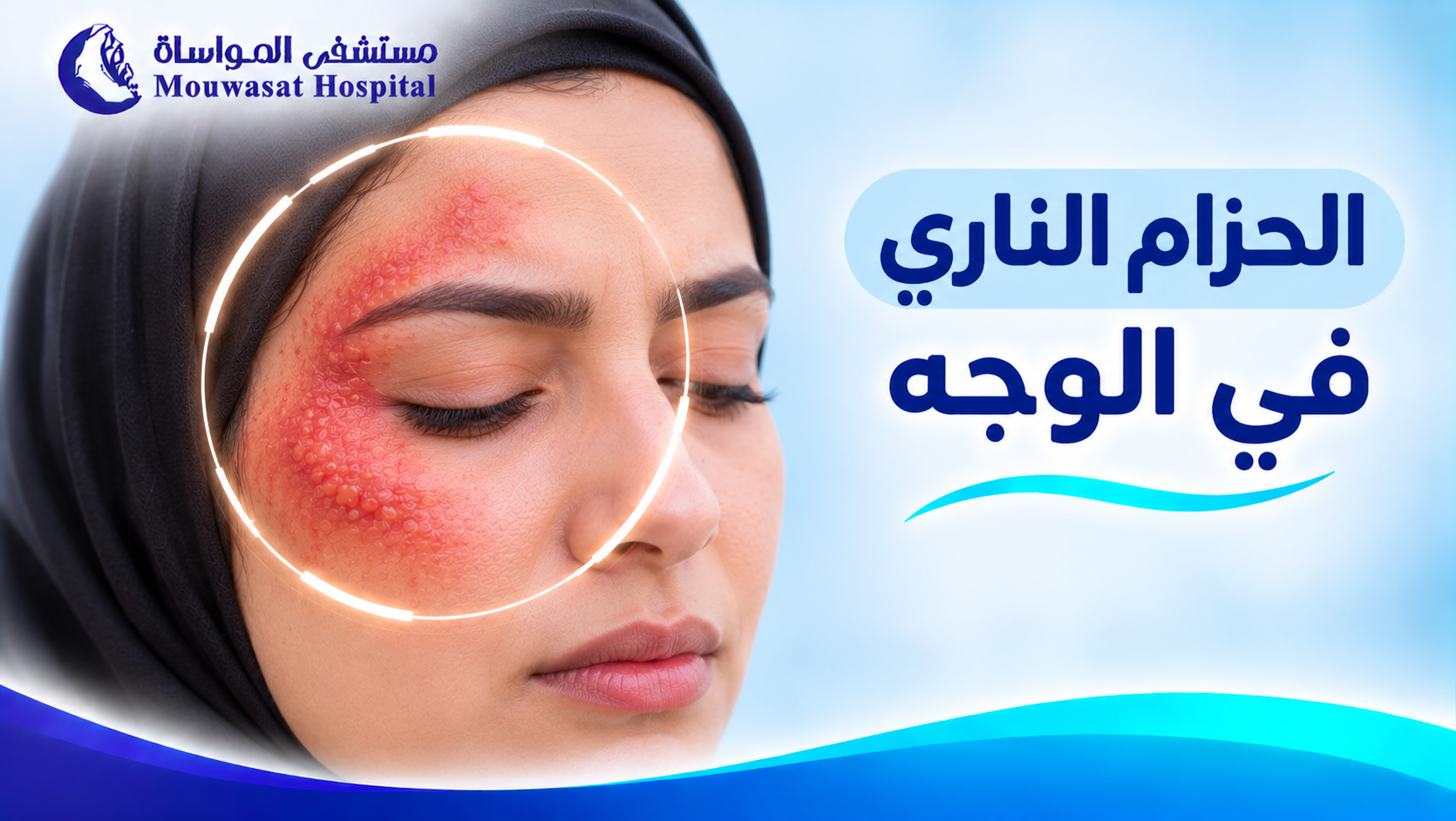

Facial shingles occurs when varicella-zoster virus (VZV) reactivates in a nerve supplying sensation to part of the face. The resulting pain and rash usually affect one side and may involve the forehead, scalp, cheek, jaw, lips, or other areas depending on the nerve involved. [1]
Facial shingles deserves particular attention because certain nerve distributions are closely associated with the eye, ear, hearing, balance, and facial movement. [1] [2]
Shingles results from reactivation of VZV that remained dormant in the nervous system after an earlier chickenpox infection.
When the virus reactivates in a sensory nerve supplying the face, pain, burning, or tingling may begin before a one-sided vesicular rash develops.
CDC identifies the face as one of the common sites of herpes zoster, and the rash typically remains within one or two adjacent dermatomes without crossing the midline. [1]
For a general overview, see Shingles: Symptoms, Appearance and When to Seek Medical Care.
Much of facial sensation is supplied by the trigeminal nerve, or fifth cranial nerve.
Its three major sensory divisions are:
| Division | Possible distribution | Important concern |
|---|---|---|
| V1 – Ophthalmic | Forehead, upper scalp, upper eyelid and nose | Ocular involvement |
| V2 – Maxillary | Cheek, upper lip, side of nose and upper jaw | Oral lesions or tooth-like pain |
| V3 – Mandibular | Lower jaw, lower lip and parts of the oral cavity | May mimic dental or jaw pain |
Reactivation may remain limited to one division, creating a sharply one-sided distribution. [3]
The rash usually follows the nerve involved rather than affecting the entire face.
Pain, itching, or tingling can begin several days before the visible rash. [1]
Yes, although oral shingles is less common than the classic skin eruption.
When the maxillary or mandibular divisions of the trigeminal nerve are involved, painful vesicles or ulcers may occur on one side of the mouth. [4]
They may affect the gums, palate, inner cheek, tongue, or nearby oral tissues depending on the nerve distribution.
Pain can sometimes resemble toothache before the rash becomes obvious.

A rash affecting the forehead, upper eyelid, or nose may indicate involvement of the ophthalmic division of the trigeminal nerve, known as herpes zoster ophthalmicus.
This can cause keratitis, uveitis, and other ocular complications that may affect vision. [1]
Seek prompt eye assessment for:
VZV can sometimes affect cranial nerves associated with the ear and facial movement, causing Ramsay Hunt syndrome.
Possible features include:
Mayo Clinic notes that Ramsay Hunt syndrome can affect the ear, face, and mouth and may alter hearing, balance, taste, and facial movement. [2]
Prompt medical assessment is important when this combination occurs.
No. Facial weakness has several possible causes and requires clinical assessment.
Sudden facial weakness combined with arm weakness or speech difficulty must be treated as a medical emergency because these are recognized stroke warning signs. [5]
| Condition | Possible clues |
|---|---|
| Shingles | Neuropathic pain followed by grouped vesicles in a one-sided nerve distribution. |
| Herpes simplex | Often causes recurrent localized cold sores and does not necessarily follow a long dermatomal distribution. |
| Contact dermatitis | Usually more itchy and associated with exposure to an irritant or allergen. |
| Impetigo or bacterial infection | Crusting, discharge, spreading inflammation, or other bacterial features may predominate. |
| Trigeminal neuralgia | Causes severe episodic facial pain without the typical shingles eruption. |
| Dental disease | May produce localized jaw or tooth pain without a dermatomal vesicular facial rash. |
Many cases can be diagnosed clinically by reviewing:
Diagnosis becomes easier after the characteristic rash appears. Pain alone before the rash can be much less specific. [1]
PCR testing for VZV may be used in atypical cases when laboratory confirmation is needed.
Treatment depends on the exact site, severity, immune status, and how long the rash has been present.
Management may include:
Antiviral therapy generally provides the greatest benefit when started early.
For treatment details, see Shingles Treatment: When to Start and How to Relieve Pain.
Sudden facial drooping accompanied by arm weakness, speech difficulty, or loss of balance requires emergency assessment for possible stroke. [5]

The Dermatology Department at Mouwasat Hospital can assess a suspected shingles rash and determine appropriate management.
Ear pain, hearing changes, vertigo, or a rash around the ear may require assessment by the ENT Department.
Facial weakness or other neurological symptoms may require additional evaluation by the Neurology Department.
Eye symptoms or changes in vision require prompt ophthalmic assessment.
Yes. The face is a recognized site of shingles, and the rash usually affects one side in a specific nerve distribution.
Pain, burning, tingling, itching, or sensitivity may begin before grouped blisters appear.
It can be more concerning when the eye, ear, or cranial nerves are involved because these areas can affect vision, hearing, balance, or facial movement.
Yes. The rash and nerve pain may extend into part of the scalp depending on the affected nerve branch.
Yes. Involvement of the maxillary or mandibular trigeminal divisions can produce unilateral painful oral ulcers.
Yes. Trigeminal zoster affecting the jaw can cause pain that resembles dental pain before the rash appears.
No. Shingles is caused by VZV, while common cold sores are usually caused by HSV. Their appearance may overlap, so distribution and clinical history matter.
Certain neurological forms of VZV infection can cause facial weakness or paralysis, including Ramsay Hunt syndrome.
Yes. Ramsay Hunt syndrome may cause hearing changes, tinnitus, vertigo, and facial weakness together with an ear-area rash.
Skin discoloration or scarring can remain in some cases, particularly after severe inflammation or secondary bacterial infection.
Vision changes, sudden neurological symptoms, facial drooping with arm weakness or speech difficulty, or rapidly worsening disease in an immunocompromised person require urgent assessment.
Facial shingles usually results from VZV reactivation within a cranial sensory nerve pathway, often a division of the trigeminal nerve.
The forehead, cheek, jaw, scalp, lips, and mouth can be involved, typically on one side.
Location matters: forehead and eyelid disease can threaten the eye, while ear-area shingles accompanied by facial weakness or hearing and balance symptoms may indicate Ramsay Hunt syndrome.
Prompt assessment is therefore particularly important when shingles affects the face.
Medical disclaimer: This article is for general health education and does not replace individual medical assessment, particularly when eye, ear, or neurological symptoms are present.