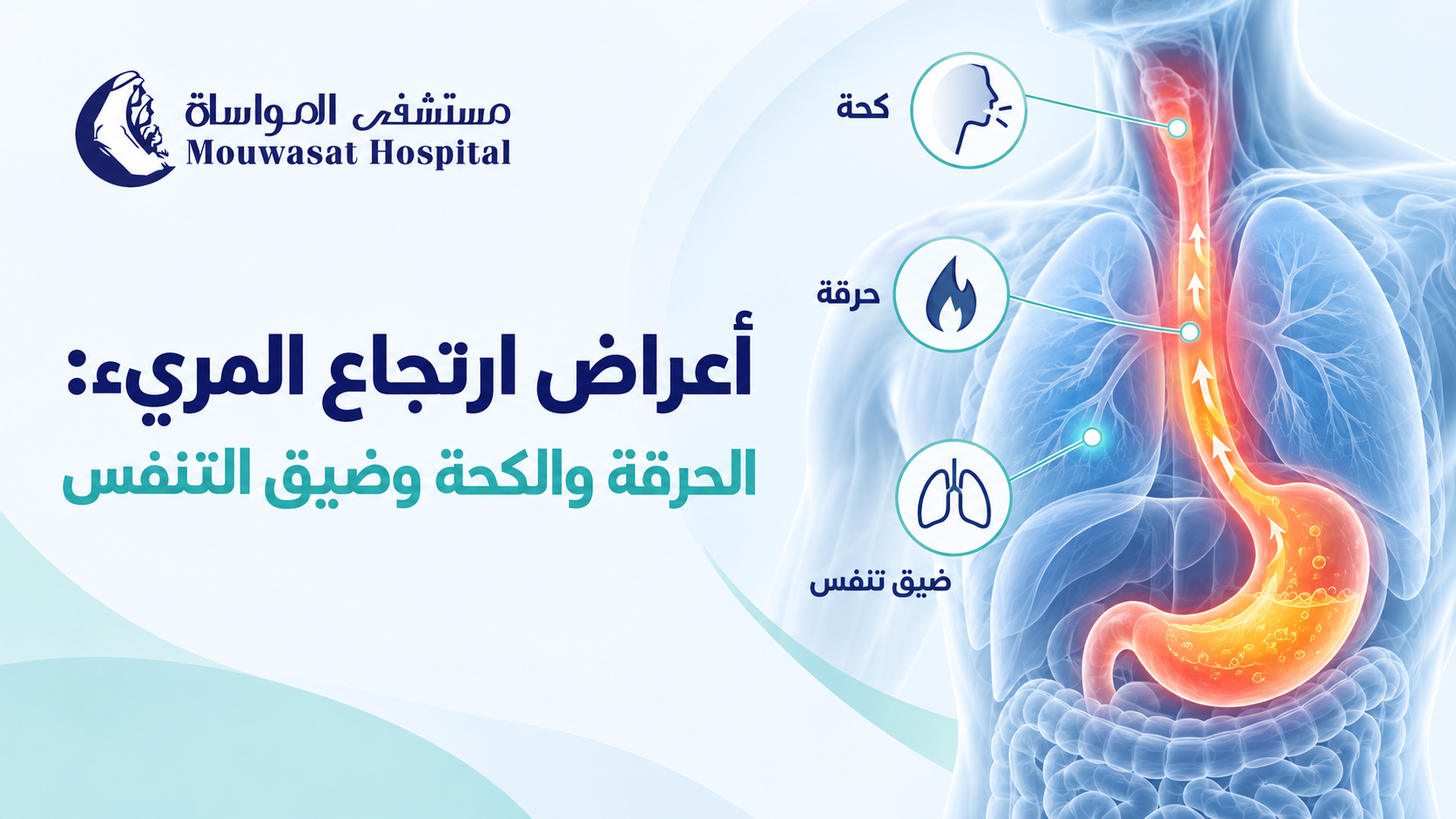

GERD symptoms vary from person to person. Heartburn behind the breastbone and regurgitation of stomach contents into the throat or mouth are among the most common symptoms, but some people may also experience cough, hoarseness, nausea, chest pain, or difficulty swallowing.
Not every symptom that occurs in someone with reflux is necessarily caused by GERD. Understanding which symptoms are typical, which may have several possible causes, and which require medical assessment can help avoid incorrect self-diagnosis.
The most common symptoms of gastroesophageal reflux disease are heartburn and regurgitation. Heartburn is typically felt as a burning sensation behind the breastbone, while regurgitation occurs when stomach contents travel back into the esophagus, throat, or mouth. [1]
Other symptoms may include:
Symptoms may become more noticeable:
The Saudi Ministry of Health notes that reflux symptoms may worsen after overeating and while bending or lying down. [2]
Occasional heartburn after a large meal does not automatically mean that a person has GERD. GERD becomes more likely when reflux causes recurrent troublesome symptoms or complications.
GERD-related heartburn is often described as a burning sensation in the middle of the chest behind the breastbone and may rise toward the throat. [1]
It may occur after eating or worsen when lying down or bending over, and it can occur together with a sour taste or regurgitation.
However, chest pain has many possible causes. A person should not assume that new or significant chest pain is simply acid reflux.

Some people experience throat or voice symptoms alongside more typical reflux symptoms. These can include:
These symptoms alone do not prove that reflux is the cause. GERD guidelines recommend evaluating other possible causes of extraesophageal symptoms before attributing them to reflux. [3]
Allergies, sinus and nasal disorders, respiratory disease, and laryngeal conditions can produce similar symptoms.
GERD can be associated with chronic cough in some people. Medical sources also recognize hoarseness and other throat or lung-related symptoms among possible extraesophageal manifestations. [1]
However, cough has many possible causes, so cough alone is not enough to diagnose GERD.
Phlegm is not one of the classic symptoms of GERD. Some patients may notice increased throat secretions or frequent throat clearing, but allergies, respiratory infections, or postnasal drainage should also be considered.
GERD may coexist with respiratory or laryngeal symptoms in some patients, and reflux has been associated with chronic cough, asthma, and voice symptoms. [4]
However, shortness of breath should not automatically be attributed to GERD. It has many potential causes involving the heart, lungs, airways, infections, and other conditions.
Some patients may also describe nighttime throat irritation or a choking sensation, but recurrent or significant breathing difficulty requires medical assessment rather than assuming reflux is responsible.
Dizziness and headache are not typical GERD symptoms.
They may occur in someone who also has GERD, but their presence does not establish reflux as the cause. Recurrent or severe dizziness or headaches should therefore be evaluated separately rather than automatically being linked to acid reflux.
A symptom occurring in someone with GERD is not necessarily caused by GERD. This is especially important for dizziness, headaches, breathing symptoms, and throat complaints.
Anxiety and stress are not diagnostic symptoms of GERD, but they may worsen reflux symptoms or make them more noticeable in some individuals.
The Saudi Ministry of Health lists anxiety and stress among factors that may trigger reflux symptoms. [2]
This distinction matters: stress may be a trigger or symptom amplifier, but it is not evidence by itself that a person has GERD.
| Symptom | Relationship to GERD | What matters? |
|---|---|---|
| Heartburn behind the breastbone | Typical symptom | Often worsens after eating or when lying down. |
| Regurgitation or sour taste | Typical symptom | Stomach contents travel back toward the throat or mouth. |
| Cough or hoarseness | May be associated | These symptoms have many other possible causes. |
| Shortness of breath | May coexist in some patients | Other heart or lung causes should not be overlooked. |
| Dizziness or headache | Not typical GERD symptoms | Persistent symptoms should be assessed for other causes. |
| Difficulty or pain with swallowing | Can occur with GERD | Persistent swallowing difficulty warrants medical evaluation. |
| Chest pain | Can occur with GERD | New or severe chest pain should not automatically be attributed to reflux. |
Yes. Not everyone with GERD experiences classic heartburn. NIDDK notes that some adults with GERD may instead experience chest pain, nausea, swallowing problems, chronic cough, or hoarseness. [1]
When only atypical symptoms are present, however, determining whether reflux is truly responsible can be more difficult because the same symptoms can arise from several other conditions.
Occasional mild reflux may improve with lifestyle measures. Recurrent, troublesome, or persistent symptoms deserve medical assessment and an appropriate treatment plan.
For a detailed look at management options, read: GERD Treatment: Available Options and When to See a Doctor.
For a broader overview of the condition, see: GERD: Symptoms, Causes, Diagnosis and Treatment.
Medical evaluation is recommended when reflux symptoms are frequent or persistent, swallowing becomes difficult, nausea or vomiting continues, unexplained weight loss develops, or symptoms do not improve despite treatment. [2]
NIDDK also recommends medical assessment for symptoms such as:
Mouwasat Hospital's Gastroenterology & Endoscopy Department provides evaluation, diagnosis and treatment for digestive disorders including reflux-related symptoms.

Yes. Nausea can occur in some people with GERD, although it is not the most typical symptom. [1]
GERD can be associated with chronic cough, but cough has many other possible causes and cannot diagnose GERD by itself.
Phlegm is not a classic GERD symptom. Throat secretions and frequent throat clearing may occur, but allergies, respiratory infections, and postnasal drainage should also be considered.
Respiratory symptoms may coexist with reflux in some patients, but shortness of breath has many possible causes and should not automatically be attributed to GERD.
Dizziness is not a typical symptom of GERD. Frequent or significant dizziness should be assessed for other possible causes.
Nighttime reflux may cause throat irritation or unpleasant sensations in some people, but recurrent choking or breathing difficulty during sleep can have other causes and should be medically evaluated.
GERD can cause chest pain or burning, but new or severe chest pain should not automatically be assumed to be acid reflux.