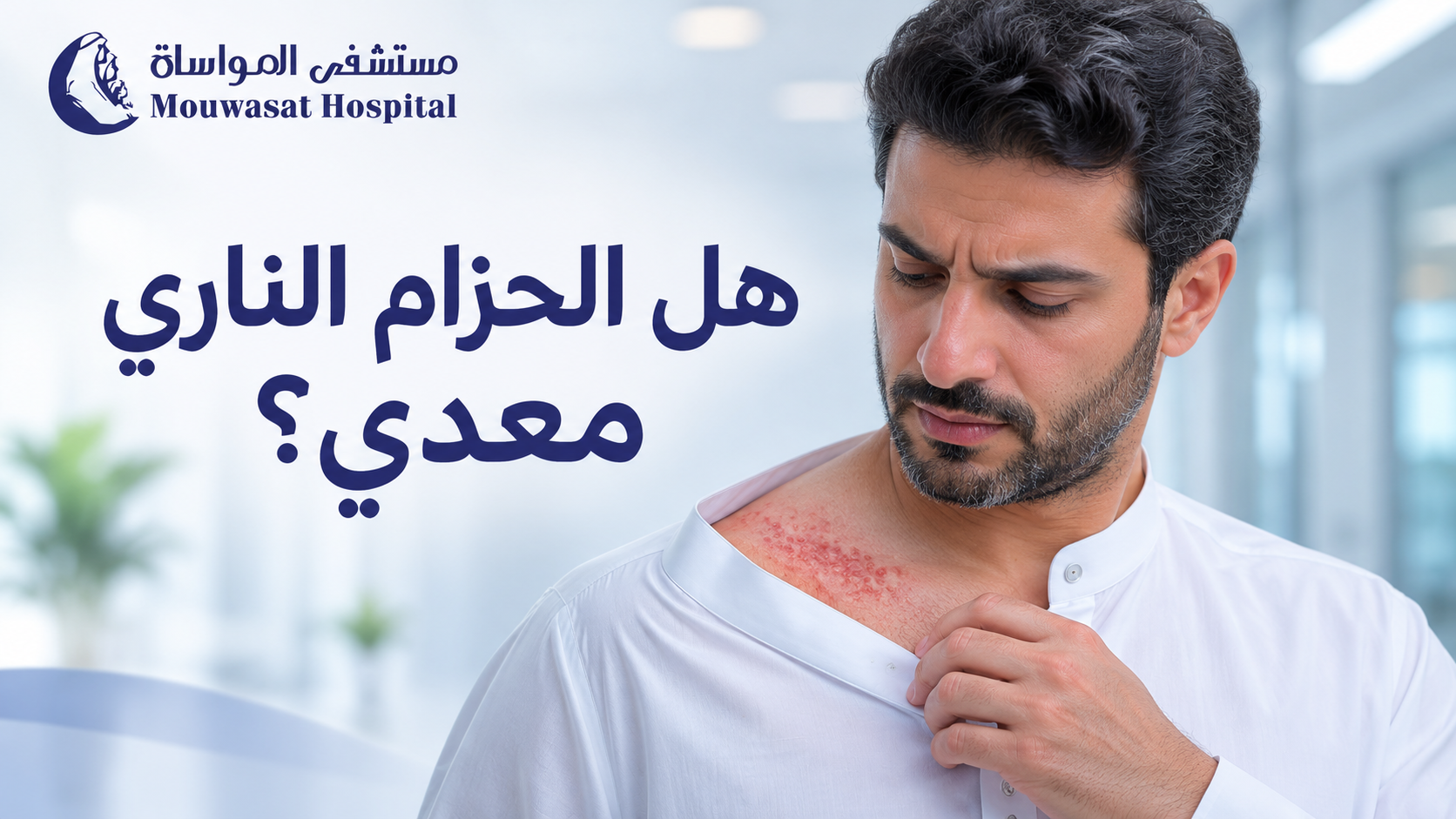


Shingles is often associated with a painful band of rash around the chest or back, but it can also affect the shoulder, arm, forearm, hand, or fingers.
This happens when varicella-zoster virus (VZV) reactivates in a nerve supplying part of the upper limb and travels along that nerve toward the skin. [1]
Upper-extremity shingles can be confusing because the early pain may resemble a neck or nerve problem, while the blisters may resemble contact dermatitis, insect bites, eczema, or herpes simplex infection.
Yes. Although the trunk and face are more common locations, shingles can affect almost any skin region, including the upper limb. [1] [2]
When VZV reactivates in a cervical or upper thoracic sensory nerve pathway, symptoms may extend through part of the shoulder, arm, forearm, hand, or fingers.
Published cases have documented shingles involving the forearm and hand in a distinct cervical dermatome. [3]
The rash does not need to form a complete belt around the arm to be shingles.
For a general overview, see Shingles: Symptoms, Causes, Appearance and When to Seek Care.
Nerve symptoms may begin before visible blisters appear.
Possible symptoms include:
Pain, itching, or tingling may begin several days before the rash. [1]
The overall distribution is usually more useful than the appearance of one individual blister.
Typical shingles tends to:
CDC describes the classic shingles eruption as involving one or two adjacent dermatomes and usually not crossing the body's midline. [1]
A dermatome is an area of skin supplied predominantly by a particular spinal nerve root.
The nerves supplying the upper limb extend from the neck toward different parts of the arm and hand. This means a shingles eruption may involve only one side of the forearm and selected fingers rather than the entire hand.
Dermatome maps overlap and vary between individuals, so an online dermatome chart should not be used to diagnose shingles by itself.
Yes. Finger involvement can occur when the affected nerve pathway extends into the hand.
However, painful blisters concentrated on one fingertip, thumb, or around the nail can also represent herpetic whitlow, which is caused by herpes simplex virus rather than VZV. [4]
A blister on a finger alone is therefore not enough to diagnose shingles.
Because shingles affects sensory nerves, the discomfort can feel different from ordinary skin irritation.
People may describe:
Pain triggered by a light stimulus that would not normally hurt is called allodynia.
In some people, nerve pain continues after the rash heals and may develop into postherpetic neuralgia (PHN). [1]
Yes, particularly before the rash appears.
Pain from shingles affecting the upper limb can begin around the shoulder or neck and radiate into the arm or hand, which may resemble cervical radiculopathy.
Published cases have described patients initially presenting with nerve-like upper-limb pain before a dermatomal shingles rash became visible. [3]
Suspicion for shingles increases when this pain is followed by grouped blisters in the same one-sided distribution.

| Condition | Typical clues |
|---|---|
| Shingles | Neuropathic pain followed by grouped vesicles in a localized one-sided nerve distribution. |
| Herpetic whitlow | HSV infection usually concentrated on a painful distal finger or thumb, often around the nail. |
| Contact dermatitis | Often associated with an irritant or allergen; itching and inflammation may have an irregular rather than dermatomal distribution. |
| Dyshidrotic eczema | Very itchy small blisters on the sides of fingers or palms, sometimes affecting both hands. |
| Insect bites | Scattered lesions without a typical sensory nerve pattern. |
| Bacterial infection | Increasing warmth, swelling, spreading redness, pus, or other signs of infection. |
DermNet describes shingles on the arm as typically painful and dermatomal, while contact dermatitis can appear in irregular patches and hand eczema often has a different pattern. [5]
Pain, tingling, and sensory changes are much more typical than motor weakness.
Rare neurological complications can affect motor function, and severe pain itself can also make someone reluctant or unable to use the arm normally.
New true weakness — such as dropping objects, reduced grip strength, difficulty moving fingers, or inability to lift the arm normally — should therefore be medically assessed rather than assumed to be caused by skin pain alone.
Many cases can be diagnosed from the history, rash appearance, and distribution.
Clinicians consider:
CDC notes that shingles is usually much easier to diagnose once the characteristic rash appears. [1]
In atypical cases, a sample from a lesion may be tested with PCR for VZV.
Treatment follows the same principles used for shingles elsewhere on the body.
It may include:
Early antiviral treatment generally provides the greatest benefit.
For more detail, see Shingles Treatment: When to Start and How to Relieve Pain.
Seek prompt assessment if:
People with weakened immune systems are more likely to develop atypical or disseminated shingles. [1]

The Dermatology Department at Mouwasat Hospital provides assessment and treatment for viral skin infections including herpes zoster.
Medical evaluation can help distinguish shingles from other blistering hand conditions, determine whether antiviral treatment is appropriate, and identify neurological symptoms requiring additional specialist assessment.
Yes. Shingles can affect the hand or arm when VZV reactivates in a nerve supplying the upper limb, although the trunk and face are more common sites.
Symptoms may begin with burning, pain, tingling, or skin sensitivity followed by grouped blisters in the same nerve distribution.
The typical shingles pattern is one-sided. A similar symmetrical rash on both hands may make other diagnoses more likely.
Yes, depending on the affected nerve pathway. However, finger blisters also have several other possible causes.
Yes. Tingling, numbness, and altered sensation can occur because shingles affects sensory nerves.
Yes. Nerve-like pain may begin several days before visible skin lesions appear.
Shingles is typically painful and follows a localized one-sided nerve distribution. Hand eczema is often predominantly itchy and may affect both hands or follow exposure to an irritant. Examination may still be needed.
Herpetic whitlow is caused by HSV and usually concentrates around a painful finger or thumb. Shingles is caused by VZV and may follow a longer nerve distribution through the arm and hand.
True motor weakness is not a typical skin symptom and should be medically assessed, particularly if grip strength or finger movement clearly decreases.
The skin eruption often follows the usual shingles course, healing over approximately two to four weeks in many people. Nerve pain can last longer.
Medical assessment can confirm the diagnosis and help start appropriate treatment early, especially when the rash is atypical or neurological symptoms are present.
Shingles can affect the hand or arm when VZV reactivates in a sensory nerve serving the upper limb.
The illness may begin with burning, tingling, or nerve pain before grouped blisters develop in a localized one-sided distribution.
Because many other conditions can cause hand blisters, including dermatitis, herpes simplex, eczema, and bacterial infections, the diagnosis should not be based on the appearance of a single lesion.
New weakness, widespread disease, severe pain, or shingles in someone with significant immune suppression requires prompt medical assessment.
Medical disclaimer: This article provides general health information and does not replace clinical evaluation of a rash or neurological symptoms.